“Then I saw ‘a new heaven and a new earth,’ for the first heaven and the first earth had passed away….” Revelation 21: 1a
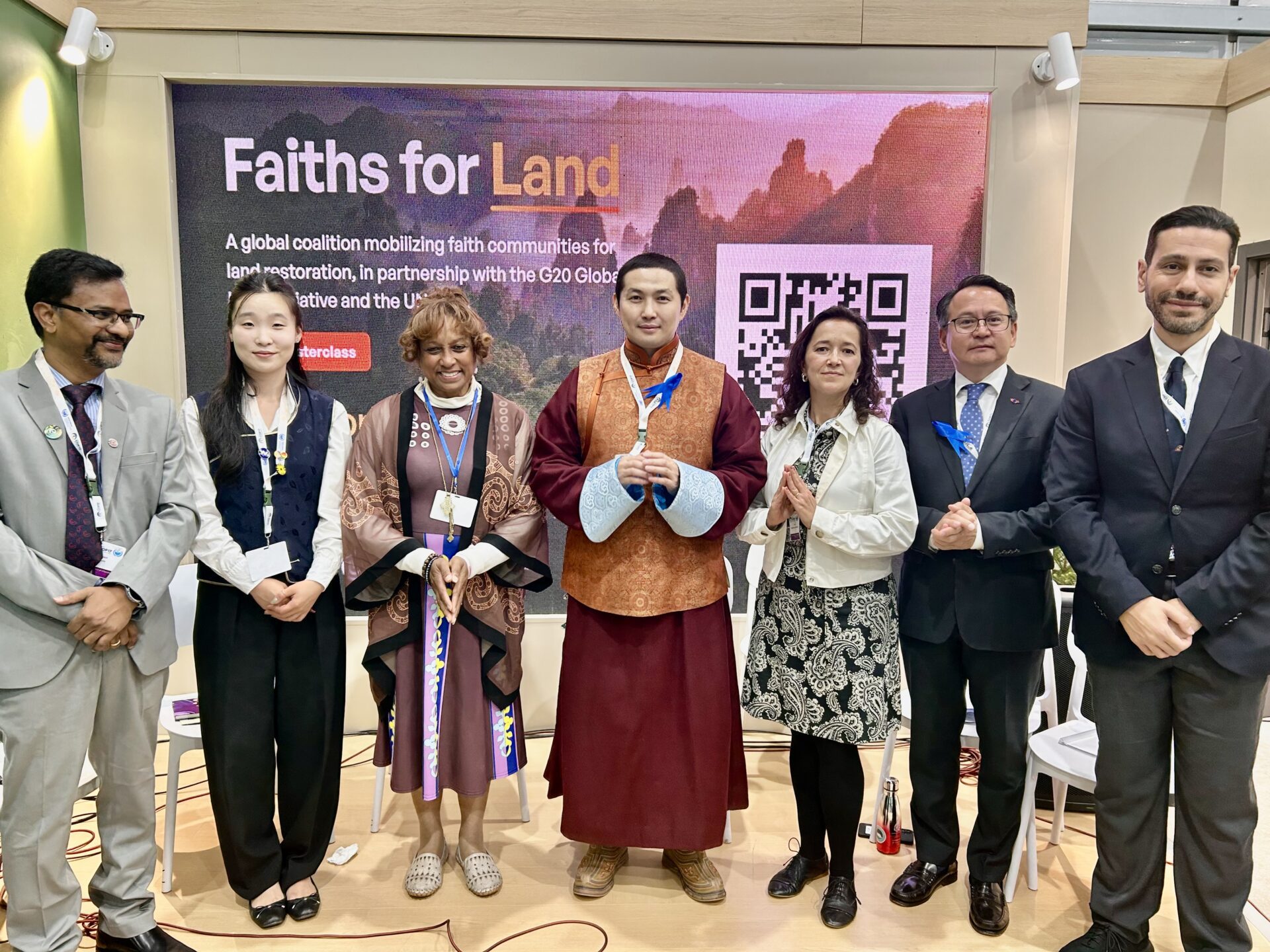
Did you know that land degradation affects up to 40% of the world’s land(s) and has implications for food production, water availability, livelihoods, and economic stability? Recently I was honored to be in Ulaanbaatar, Mongolia, for the United Nations Convention to Combat Desertification, where the theme of “Restoring Land, Restoring Hope” was addressed. Today Mongolia is among the countries most affected by desertification, with nearly 77% of its land already degraded.
The event was held during this year’s International Year of Rangelands and Pastoralists. Rangeland covers more than half of the Earth’s land surface and one-sixth of the world’s nutrition needs, and yet, such lands are often overlooked and have increasing degraded ecosystems. This includes land degradation in the United States, which is a major challenge. It comes from intensive farming, erosion, and climate change. This damage lowers crop yields and costs the country billions of dollars every year. At the African Union session, “Restoring African Landscapes, Restoring Hope,” government ministers reported that 65% of Africa’s productive land is degraded and roughly 45% of the world’s land is degraded, threatening food security, water availability, and rural livelihoods
Land degradation and massive land loss in the Pan African community in the United States stems from systemic racism, discriminatory government lending, and predatory legal practices. These have reduced Black farm ownership from 15 million acres in 1910 to a tiny fraction today. This process destroyed generational wealth and concentrated Black populations in environmentally vulnerable areas. These issues are explored further in Bread for the World’s Pan African Devotional and Racial Wealth Gap Simulation.
Recently, I made a pilgrimage to the State of Oklahoma, also known as “Indian Territory of 39 nations,” where the majority of our indigenous brothers and sisters live in the United States on Turtle Island. I thought of the Trail of Tears, a trail of death. And I thought about African peoples being removed from their land. It is important to remember this history during the 250th year of the United States.
The UN Session reflected on these priorities and affirmed our values of faith, calling for land for life, land for food—with a focus on sustainable agroecology and Farmer Managed Natural Regeneration (FMNR). Faith communities made the argument that land degradation belongs in both the moral column and the technical one. Indeed, we affirmed that there still is an ancient spiritual call to a new heaven and earth (Revelation 21:1-4, Genesis 12:1, Deuteronomy 8:7).
This Judeo-Christian call is aligned with the values of many faith communities, which was affirmed at the UN Session. You can go here to learn more about the event sessions and how aligned science, policies, and advocacy actions can inform, inspire and lead people of faith to deepen our resolve to walk together as we seek to reach an impactful vision of restoration and renewal of land and hope going forward.

Related Resources
Helping Hungry People and Healing the Land: Regenerative Agriculture in Burundi
By Philippe Lazaro, Plant with Purpose In Burundi, a small landlocked country in East Africa, far too many...

A Season of Good Friday and Easter Hope
For everything there is a season and a time for every matter under heaven: Ecclesiastes 3:1 Recently, Bread...