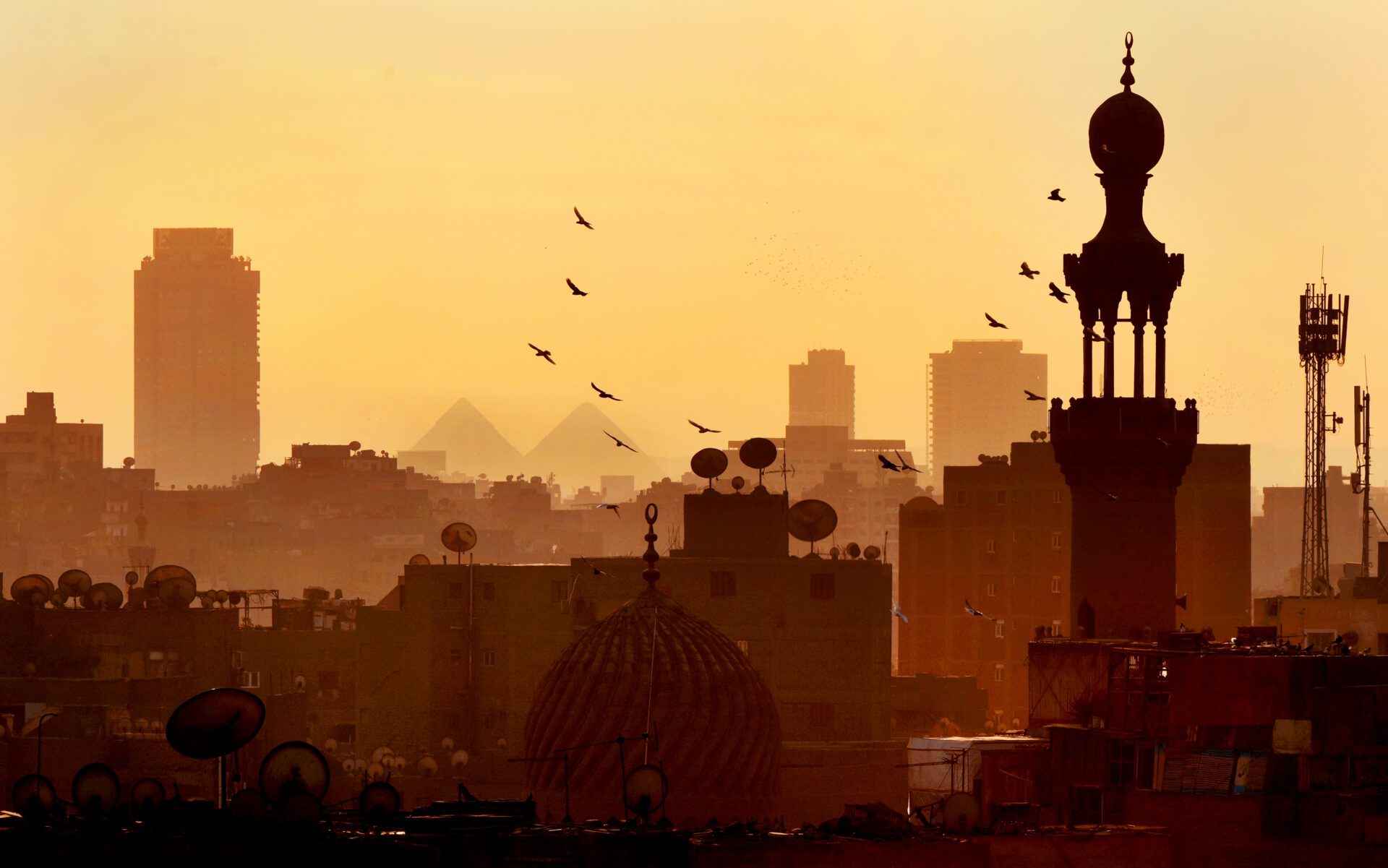
In the Egyptian dialect of Arabic, the word for bread is aish, which also means life. In 2008, when global food prices surged and Egyptian households were spending nearly 40 percent of their income on food, protests erupted in bread lines. By 2011, when consumer food prices had effectively doubled, millions of Egyptians took to the streets chanting a single word: aish.
War and Conflict Created Higher Bread Prices in Egypt
That crisis was not the last of its kind. Egypt imports roughly 80 percent of its wheat from Russia and Ukraine, and when war began between those two nations in 2022, global grain markets destabilized. For Egypt, this meant an economic rupture at the most intimate level of daily life. In June 2024, the government quadrupled the price of subsidized bread for the first time in 36 years. Today, ongoing conflicts across the Middle East and globally threaten yet another round of price increases and cascading hunger. According to the 2025 Global Report on Food Crises, famine has been confirmed in the Gaza Strip, while in Yemen, more than half of the population goes hungry and nearly one in two children is severely malnourished. Global shocks consistently land hardest on the tables of ordinary families across the Arab world, and beyond.
The Arab World and the Faith Communities Represented
The Arab world is largely represented as the 22 member states of the Arab League, stretching from Morocco in the west to the Gulf states in the east, and is home to over 400 million people. Muslims comprise 94 percent of the region’s population, yet the landscape is far from monolithic. Coptic, Maronite, and Assyrian Christian communities are present across Egypt, Lebanon, Iraq, Jordan, and Gaza and West Bank, right alongside Druze, Yezidi, and Mandaean minorities. Christians represent three percent of the region’s population, with Egypt’s Coptic Church alone having between 15 and 21 million members. It is this tapestry of faith communities — rooted in centuries of shared geography and deepened by shared hardship — that positions religious institutions as one of the few trusted actors in the region’s response to food insecurity.
The Role of Faith Communities in Alleviating Food Insecurity
Across the Arab world, faith-based institutions have long served as the first and most reliable defense against hunger. Al-Azhar, the ancient center of Sunni Islamic scholarship, runs food distribution programs serving Egyptians in remote and rural areas. During Ramadan, its Zakat and Charity House – zakat being the religious obligation to give to charity – distributes 2.3 million food boxes, operates 150 central kitchens, and provides over 6.4 million meals to those in need.
Coptic Christians, Egypt’s ancient Christian community, constitute up to 10 percent of the country’s population. Coptic Christians can trace their church to Saint Mark the Evangelist in the 1st century and in Egypt they operate community kitchens and relief networks when government systems fall short. The Coptic Orthodox Church’s Papal Office for Projects runs the Saint Mark Aid Program, supplying monthly food boxes and basic needs across 10 governorates, filling gaps that government systems routinely leave behind. These institutions do not arrive as outsiders, they arrive as neighbors.
The Role of U.S. Government Programs in Alleviating Food Insecurity in the Arab World
Historically, the U.S. government has also played an important role in alleviating hunger across this region, especially in responding to hunger hot spots. Programs like Food for Peace, which is authorized under the U.S. Farm Bill and was formerly administered by the U.S. Agency for International Development (USAID), operated in more than 150 countries and has reached more than four billion people since 1954. The World Food Programme delivered critical food aid to refugees and crisis-affected populations in Egypt using resources from Food for Peace and continues to support vulnerable populations throughout the region.
A recent U.S. State Department report on global food security programs highlighted that up to 254 million people could face crisis levels of hunger in 2026. Some of these countries could have at least 10 million people facing acute food insecurity, including in Yemen, Iran, Pakistan, Afghanistan, Gaza/West Bank, and Syria. However, the recent change in country selection criteria for Food for Peace, which would leave out many of the listed nations, could make this hunger crisis worse by not reaching the most food insecure populations.
Excluding nations with the highest rates of food insecurity and malnutrition from Food for Peace is life threatening, especially to children. Local faith-based institutions and organizations – in concert with U.S. funded global food security programs – are more critical than ever amidst these challenges. Al-Azhar and the Coptic Church can extend the reach of foreign assistance and serve local populations, but they cannot replace its scale. In a region where bread means life, all hands are needed to ensure tables are set with food that nourishes everyone.
Mohamed Khaled Attia was the Spiritual Formation and Wellness Intern at Bread for the World.
Deepen your understanding of hunger’s causes and solutions – join our Institute Insights community and receive free, research-based articles like this one straight to your inbox.
Join Our Community
Related Resources

The Case for Restoring Household Food Security Data
Every September, the U.S. Department of Agriculture (USDA) released its annual Household Food Security in the U.S. Report,...

Food Security in Puerto Rico: The Case for Transitioning NAP to...
Puerto Rico is a U.S. territory home to 3.2 million American citizens. This is a higher population than...