
Introduction:
The familiar song goes, “Jesus loves the little children, all the children of the world.” Many grew up hearing this song, and Bread for the World takes these words seriously and strives to act in keeping with them. Yet, more than 1 in 5 U.S. children are at risk of hunger, and around the world, a child dies every 10 seconds from malnutrition.7 Child hunger is solvable—the world grows enough food to feed every child. However, we need the collective political will to get healthy food to those who desperately need it.
In the United States in 2023, 13.8 million children lived in households that experienced food insecurity—4 million more children than the previous year.8 These children regularly ate cheaper, lower-quality foods because their families were running out of money for food.
Not all families are affected equally by hunger; it often depends on where they live. Arkansas, Texas, Louisiana, Mississippi, Oklahoma, Kentucky, South Carolina, West Virginia, Wyoming, and Michigan are the 10 hungriest states in our nation with higher-than-average food insecurity rates.9 Children living in rural areas and the South are more likely to experience food insecurity. Black and Hispanic children are also more likely to be affected; their families are twice as likely to be food insecure as their white counterparts.10
The disparity and rise in child hunger highlight the importance of federal programs like the Special Supplemental Nutrition Program for Women, Infants, and Children (WIC), the Child Tax Credit (CTC), and school nutrition programs. They invest in our children’s future by giving them a nutritious start in life.
Malnutrition in all its forms includes undernutrition—such as wasting, stunting, being underweight, or consuming inadequate amounts of vitamins or minerals—along with overweight and obesity and resulting diet-related noncommunicable diseases.11 Around the world, more than 148 million children are stunted or too short for their age due to undernutrition, and 37 million are overweight or obese.12
Globally, nearly 43 million children are suffering from the most devastating form of child malnutrition, which is called severe acute malnutrition or wasting.13 Wasting results from rapid weight loss or failure to gain weight and happens when a child does not get enough of the right food and nutrition—sometimes the result of a natural disaster, an armed conflict, or another disruption to a family’s food source. Children who survive early malnutrition often suffer lifelong health problems and damage to their physical and cognitive development. This is especially detrimental during the 1,000 days from a woman’s pregnancy to a child’s second birthday. The impacts of malnutrition can begin early in the 1,000 days, meaning during pregnancy or in a baby’s first six months, resulting in lifelong physical and mental development impediments.14
Parents, local leaders, national leaders, and the global community are keenly aware of the problem of malnutrition. Many countries around the world are struggling with emergency hunger and malnutrition levels. There are multiple countries and territories facing famine, the most severe stage of hunger in a community, at the same time. This means that, after doing everything in their power and receiving all available assistance, families still have an extreme lack of food. The most recent update from the World Food Programme (WFP) and the United Nations Food and Agriculture Organization (FAO), covering November 2024 to May 2025, does not mince words describing famine: “Starvation, death, destitution, and extremely critical acute malnutrition levels are evident.”15

Poverty is the greatest cause of child hunger around the world. Children whose families cannot afford to feed them nutritious foods—or much food at all—are at the highest risk of hunger and malnutrition. In the United States, poverty is often the result of a shortage of jobs that pay a living wage to support a family or, when the national economy is struggling, a shortage of available jobs. Many parents face barriers to employment. Two examples among many are the lack of affordable childcare and employers’ hesitance to hire community members with criminal histories.
Globally, people who live in extreme poverty—meaning that they have $2.15 or less to spend each day—use most of their income, sometimes up to 80 percent,16 on food. This affects 333 million children.17 Any increase in food prices creates additional hardship because the family budget has little or no flexibility. This often puts basic grains, much less a diverse and nutritious diet, out of reach. Governments also frequently struggle and lack the resources to help everyone in need, sometimes because of their heavy debt obligations. Changes in the climate exacerbate families’ abilities to nourish themselves and their children.
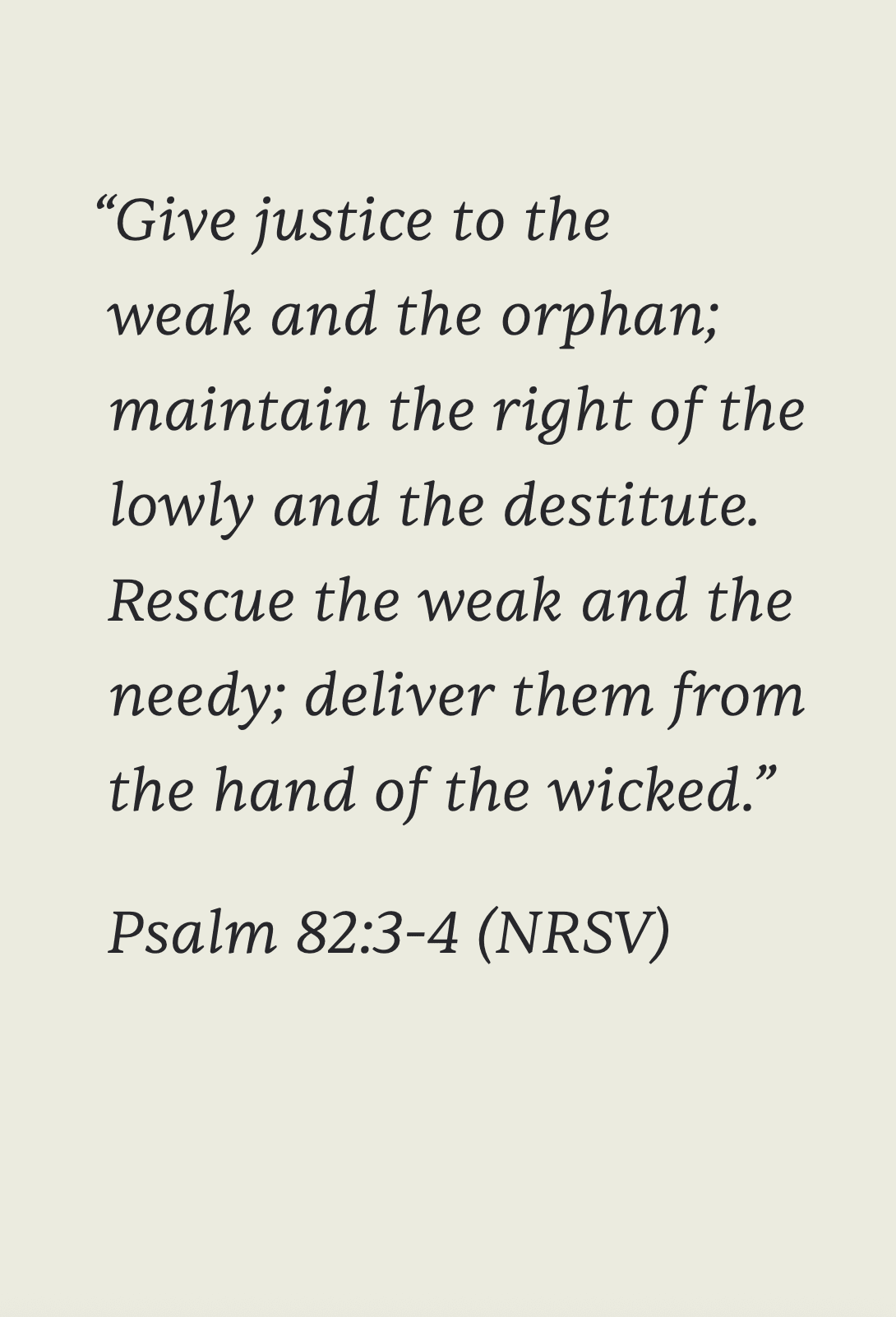
In the Old Testament, God sees, hears, and responds to the cries of poor and vulnerable people. Through Jesus’ teachings, God insists that his people care for others who are vulnerable; children are often the most vulnerable among us. Bread heeds God’s call and is committed to addressing child hunger in the United States and worldwide. In 2025 and 2026, we seek transformative policy change by investing in programs proven to improve child nutrition and alleviate child hunger.
Read the Full Report:
Notes:
- 7) WFP USA (2022). “10 Facts About Child Hunger in the World.” Accessed 14 March 2025. https://www.wfpusa.org/articles/10-facts-child-hunger/.
- 8) Rabbitt, M, et al (2024). Household food security in the United States in 2023 (Report No. ERR-337). U.S. Department of Agriculture, Economic Research Service. Washington, DC. https://ers.usda.gov/sites/default/files/_laserfiche/publications/10986/ERR-337.pdf?v=71312.
- 9) Ibid.
- 10) Ibid.
- 11) WHO (n.d.). “Malnutrition in all its forms.” Accessed 14 March 2025. https://www.emro.who.int/nutrition/double-burden-ofnutrition/malnutrition-in-all-its-forms.html.
- 12) WHO (2025). “Joint child malnutrition estimates.” Accessed 21 May 2025. https://www.who.int/data/gho/data/themes/topics/joint-child-malnutrition-estimates-unicef-who-wb.
- 13) Ibid.
- 14) Berkeley Public Health (2023). “A critical window: Early malnutrition sets stage for poor growth and even death, researchers find.” Accessed 14 March 2025. https://publichealth.berkeley.edu/news-media/research-highlights/early-malnutrition-setsstage-for-poor-growth-and-even-death.
- 15) WFP & FAO (2024). Hunger Hotspots. FAO-WFP early warnings on acute food insecurity: November 2024 to May 2025 outlook. Rome, Italy. https://doi.org/10.4060/cd2995en.
- 16) Brinkman, H, et al. (2010). High Food Prices and the Global Financial Crisis Have Reduced Access to Nutritious Food and Worsened Nutritional Status and Health. The Journal of Nutrition. Volume 140, Issue 1, Pages 153S-161S. https://www.sciencedirect.com/science/article/pii/S0022316622069413.
- 17) Salmeron-Gomez, D, et al. (2023). Global Trends in Child Monetary Poverty According to International Poverty Lines. World Bank Group. Washington, DC. https://www.unicef.org/media/146771/file/Global%20Trends%20in%20Child%20Monetary%20Poverty:%20According%20to%20International%20Poverty%20Lines.pdf.
Deepen your understanding of hunger’s causes and solutions – join our Institute Insights community and receive free, research-based articles like this one straight to your inbox.
Join Our Community
Related Resources

Bread Celebrates House Passage of Vital Global Humanitarian Aid and Nutrition...
Washington, D.C., January 15, 2026 — Bread for the World issued the following statement regarding the House passage of the Fiscal Year 2026 National Security, Department of...

2026: Hope for a Renewed World
“Yet to all who did receive him, to those who believed in his name, he gave the right...