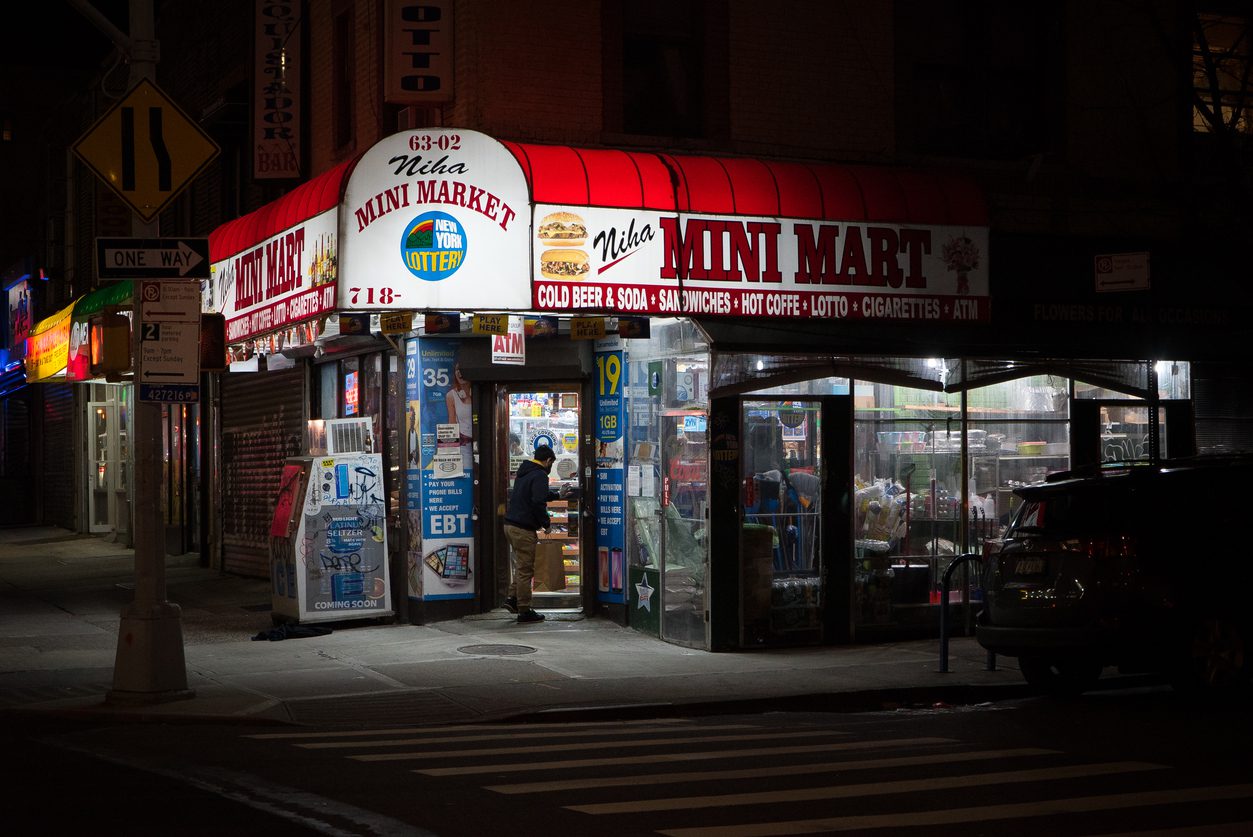
By Jessica Van Tassel
In many communities across the country, a simple need goes unmet: access to a grocery store. It is not always easy to identify something that is missing, and the topic of grocery store access is not a common news headline. Not being able to get to a store easily carries consequences for people’s health, dignity, and quality of life—every day. The problem can easily become invisible to those who are not living in it. The convenience of a nearby grocery store can go unnoticed until it is taken away.
More than 18 million people live in food deserts, defined as areas with limited access to grocery stores and many people with low incomes. In urban areas, a food desert is typically defined as a low-income neighborhood where a significant share of residents live more than one mile from the nearest supermarket; in rural areas, the distance extends to ten miles. Food deserts are not exclusively urban or rural—they are found in both geographies. What they do share is deeper structural roots. They are often located in areas that have been shaped by race, income, and decades of disinvestment. Areas with high poverty rates and, outside of dense cities, high concentrations of minority residents, are more likely to have food deserts.
It is difficult to convey the complicated story behind each city, community, and neighborhood that have food deserts, but it is important to highlight at least one.
Baltimore, Maryland, is an old American city with a rich history. According to the Center for a Livable Future at Johns Hopkins University, 1 in 4 Baltimore residents live in a food desert. The city’s past helps tell the story of why there are so many food deserts. Baltimore has a long history of segregation that cemented systemic inequities and allowed food deserts to arise throughout the city.
Baltimore was one of the first states to codify segregation in neighborhoods (1910 segregation), banning Black people from living in white neighborhoods. In 1917, this was found to be unconstitutional, but not before segregated Black neighborhoods had suffered deep damage. The federal government’s redlining maps in the 1930s categorized Black neighborhoods as “hazardous” for investing, which cut off their access to home loans and development funds. Another practice was “blockbusting,” meaning that realtors stoked racial panic to spur rapid turnover, which displaced residents and destabilized local economies.
These practices hollowed out neighborhoods, making them less attractive to essential businesses, like grocery stores. To make matters worse, mid-century highway construction cut through neighborhoods, physically isolating communities and disrupting access to businesses and services. For example, the Jones Falls Expressway cut through neighborhoods in East Baltimore. Cities such as New Orleans, Louisiana, and Detroit, Michigan, also permitted infrastructure practices that resulted in Black neighborhoods being excluded and isolated from public goods. A grocery store might remain in the same nearby location but become virtually inaccessible by foot or public transit due to a newly constructed highway, for example.
Despite their importance, grocery stores are not easy businesses to run. They have tight profit margins and there are numerous difficulties associated with opening one. Black neighborhoods in cities like Baltimore have suffered from decades of degradation and disinvestment, which discourages grocery store operators from opening in those areas. In place of grocery stores, many of these neighborhoods see an influx of tobacco and liquor stores, which face far fewer regulatory barriers to opening, and discount retail stores, which often lack fresh and healthy food.
This is still a common problem. Earlier this year, a Baltimore food pantry reported an increase in demand following the closure of a nearby grocery store. The spike in demand underlines a core truth behind Bread for the World’s mission: food pantries, charities, and nonprofits alone cannot end hunger. The problem of food deserts is deeply rooted in systemic inequities and requires structural, government-led change.
Current federal policy decisions could worsen food deserts in places like Baltimore. In July, Congress passed a reconciliation bill, H.R.1, that included several provisions changing the Supplemental Nutrition Assistance Program (SNAP). Bread issued a statement on the passage of this bill and how it would increase hunger across the U.S.
SNAP not only provides essential food to vulnerable populations but also supports a vital income stream for local grocers. Many grocery stores depend on SNAP participants as a customer base and without them, some stores would struggle to stay open, especially community grocery stores.
It is essential that people who live in food deserts do not fall through the cracks. They must gain access to the food resources they need, especially through grocery stores. Their stories must not be ignored, particularly as cuts to critical federal nutrition programs take effect.
At Bread, we believe access to nutritious food is not a privilege—it is a responsibility shared by all. The effort to end hunger demands not only compassion, but also collective attention and the courage to pursue justice for communities that were excluded from growth, prosperity, and goods and services that all people need, like grocery stores.
Jessica Van Tassel is a Policy and Research Institute intern with Bread for the World
Deepen your understanding of hunger’s causes and solutions – join our Institute Insights community and receive free, research-based articles like this one straight to your inbox.
Join Our Community
Related Resources

What’s For Dinner? A Public Grocery Option
The kitchen table has long been a gathering place for families to discuss some of their greatest problems...
Less Food Waste Means a More Effective Food System
Bread for the World emphasizes that an effective food system gets food from farm to table while prioritizing...