Editor’s note: This is the first of two articles. It describes the factors that increase the risk of conflict between displaced and host communities. The second article considers potential remedies such as thoughtful integration policies, equitable aid distribution, and community-based approaches.
By Anke Marais
Around the globe, food insecurity deepens tensions between displaced people and the communities that receive them. Not only do conflict and displacement cause hunger, as Bread for the World frequently mentions, but hunger is also a driver of conflict and displacement, in a vicious cycle that threatens human lives and human flourishing.
These frictions rarely arise from cultural misunderstanding or social mistrust alone. Rather, the cause is usually tangible: competition over resources that both hosts and displaced people rely on to survive. When access to food, water, shelter, or employment is already limited, even small pressures can push already strained communities toward conflict.
As of 2024, over 64 million people were internally displaced in 38 countries that were grappling with severe hunger crises. An additional 26 million people were refugees and asylum seekers who were hosted by countries that were struggling to meet their own food needs.
These numbers reveal how frequently displacement and food insecurity intersect. Often, refugees arrive with nothing in places where public systems are overburdened and local communities already face threats such as failing harvests.
Displaced people typically rely on humanitarian assistance, especially for food, since they are unable to access land to grow food and in many cases are not legally authorized to work. Local communities, meanwhile, may receive little support from government or aid organizations, despite the sudden arrival of many additional displaced people. Humanitarian assistance can improve conditions, but how the aid is distributed matters. There is a risk of creating additional problems if the distribution is seen as unequal by either the host or displaced communities.
Conflict is often intensified when displaced populations engage in small-scale survival activities that overlap or interfere with those of the hosts — for example, collecting firewood, harvesting grasses, or grazing animals. Such activities can be both necessary for survival, and an encroachment on the resources of a group that is also struggling to survive.
Problems may be exacerbated by weak governance and/or a history of marginalizing some groups. Both can reinforce longstanding grievances, potentially in ways that new arrivals may not anticipate.
Climate change is another complicating factor that can cause displacement. Regions that are already under the most environmental pressure are disproportionately at risk of further climate impacts and displacement. Drought, flooding, extreme heat, and soil depletion can reduce crop yields, eliminate pasture, and destabilize the seasonal rhythms that many communities use to plan their planting and harvest schedules. Climate shocks then act as a multiplier: intensifying food scarcity, inflaming competition, and undermining the conditions for shared resilience.
Groups that plan and carry out humanitarian assistance must navigate not only material scarcity, but the social narratives that surround it. The risk of conflict increases when aid is siloed, overly concentrated on one group, and/or lacks transparency and community involvement in its distribution. The following case studies capture some of these complex situations.
Case study 1: Uganda
Uganda is often praised for its refugee policies, including generous land allocations, access to schools, and integration into public services. It currently hosts one of the largest refugee populations in the world, with settlements like Bidibidi, Rhino Camp, and Palabek each housing tens of thousands of people. Yet, even in this relatively inclusive policy environment, tensions surface when resources run short. In regions of northern Uganda, disputes have erupted over access to firewood, grazing land, and water points. Women tasked with collecting wood from surrounding forests have reported harassment and attacks, particularly as nearby vegetation becomes depleted. Simultaneously, shifting rainfall patterns, longer dry spells, and unpredictable growing seasons have eroded food security for both refugees and local residents. While Uganda’s efforts at integration are notable, they are vulnerable to the growing strain of climate-linked resource scarcity.
Case study 2: Cox’s Bazar, Bangladesh
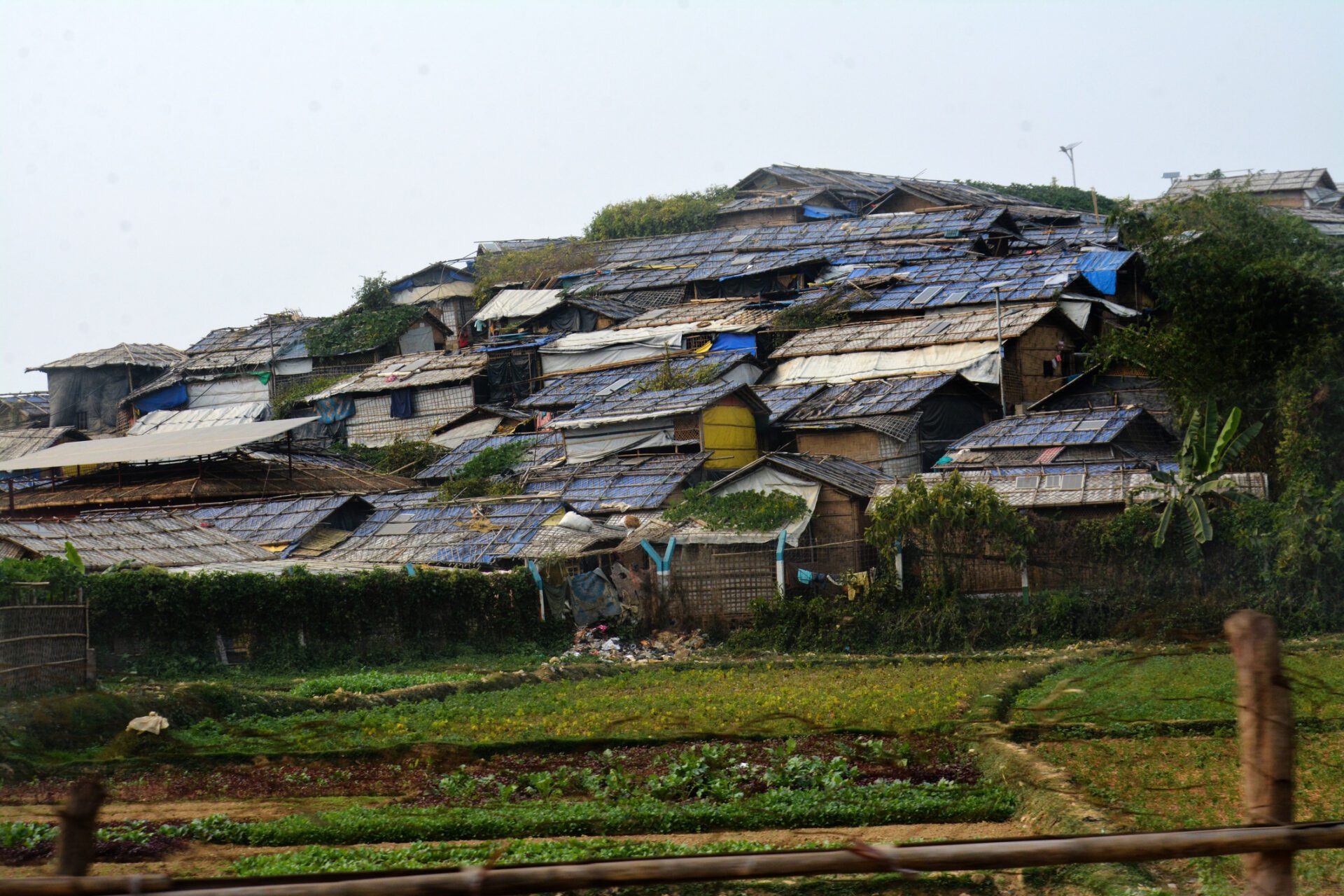
Nearly one million people have fled to Bangladesh’s Cox’s Bazar area from neighboring Myanmar because of targeted violence against the Rohingya ethnic group. They live in crowded camps with few opportunities for self-sufficiency. Local Bangladeshi communities, already facing economic hardship, now compete for agricultural land, forest products, and informal work. The rapid expansion of the camps has led to large-scale deforestation, making the area more vulnerable to flooding and landslides. Both climate impacts and competition for land make it far more difficult for farmers to earn a living.
Some organizations in the Cox’s Bazar NGO Platform, whose members include dozens of national nonprofit groups as well as international and local groups, have introduced small-scale interventions such as home gardens and permaculture training. While these have improved food access for some refugee families, such programs remain underfunded and insufficient given the scale of need. When the World Food Programme was forced to cut food aid rations in 2023 due to donor shortfalls, tensions intensified. Many families resorted to risky coping strategies. The situation illustrates how food insecurity, when combined with climate vulnerability and limited livelihood options, can rapidly escalate into a volatile political and humanitarian scenario.
Ultimately, hunger can be both the cause and effect of displacement and conflict. It amplifies existing inequalities, aggravates perceptions of unfairness among host and displaced populations, and magnifies the pressure on already fragile systems. For many people on both sides, the struggle is not only for nourishment but for fairness, dignity, and a sustainable path forward. Preventing hunger from becoming a source of friction requires more than just food delivery. It calls for policies and programs that anticipate social dynamics, support both communities, and foster systems of shared resilience.
Anke Marais is a climate intern, Policy and Research Institute, with Bread for the World.
Deepen your understanding of hunger’s causes and solutions – join our Institute Insights community and receive free, research-based articles like this one straight to your inbox.
Join Our Community
Related Resources
How Humanitarian Assistance Saves Lives
When global catastrophes strike, whether through conflict, natural disasters, or disease, communities find themselves without the most basic...

WORKING TOGETHER TO END HUNGER: 2025 Legislative and Policy Achievements
A series of administrative and congressional actions this year dealt devastating blows to the United States’ international assistance...