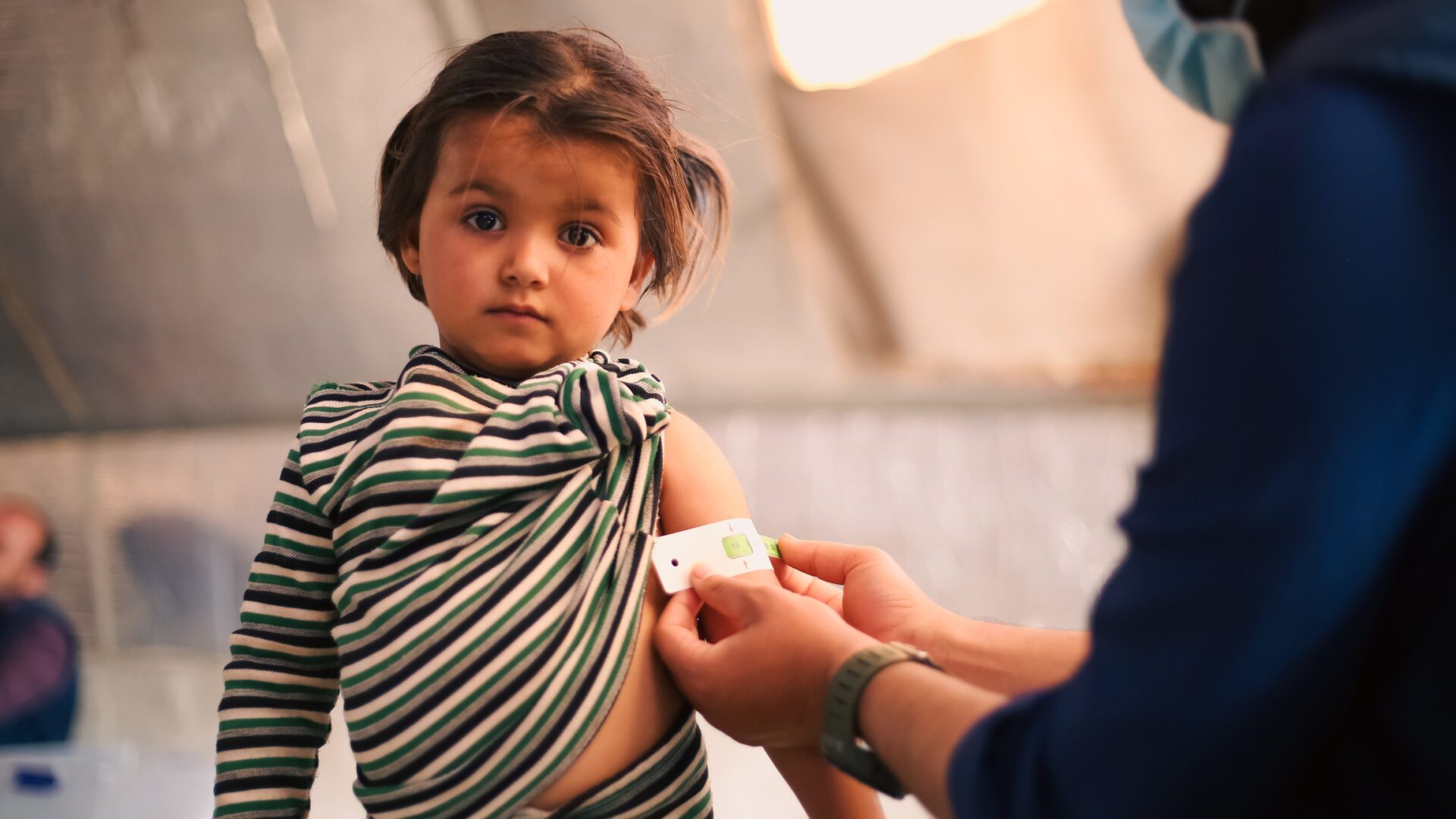
Soaring rates of severe malnutrition and famine make it clear that we need to ensure robust funding for global nutrition.
Good nutrition is the bedrock for a healthy and impactful life. Without it, children, families, and communities face significant challenges: disruptions to physical, mental, and emotional development; lost productivity; strain on healthcare systems; and instability.
UNICEF estimates that almost 45 million children under the age of 5 suffer from wasting (a condition whereby a child is severely thin for their height due to poor nutrition).1 Nearly half of all preventable deaths among children under five are attributed to malnutrition. And yet, we are only able to reach roughly 25 percent of children suffering from the most dangerous form of malnutrition.2
Despite progress over the past few decades, the world continues to lose more than two million young children to malnutrition every year.3
Most people living with malnutrition are concentrated in South Asia, sub-Saharan Africa, and Central America. The causes of malnutrition and food insecurity are often rooted in and amplified by conflict and political instability, rising food prices, climate impacts, and the aftermath of COVID-19.
Bread for the World and its partners are asking Congress to provide robust funding for global nutrition in the federal budget.
Sadia, a mother in Tuvuu, Ghana who received support from USAID-trained health care workers for nutrition, said:
“I now know the local ingredients that I need to add to the child’s food and fruits to help her recover from malnutrition. I add turkey berries, bean seeds, bean leaves, and jute leaves to the meat and fish to prepare stews and soups for the child. I can see that she is growing well now.”
In 2023, USAID nutrition programs reached more than 39 million women and children globally with critical nutrition interventions, including:
- 28 million children with nutrition programs
- 11 million women with counseling on maternal and child nutrition and micronutrient supplementation
- 6 million infants and young children through nutrition education, resources, and programs provided to families and caregivers
- 256,000 people with professional nutrition training and skills development to deliver nutrition-related interventions
But the need is far greater. By robustly funding global nutrition programs, we can reach more women and children with evidence-based and highly effective treatment that saves lives and provides a brighter future for children and families.
Every $1 invested in nutrition results in up to $35 in economic returns.4
Better nutrition for children and women will enable countries to improve the health of their populations, send more children to school, and strengthen their economies.
For a tiny fraction—less than 1 percent— of the federal budget, global nutrition programs reach millions of children and mothers with lifesaving aid. These programs also support U.S. strategic interests by building and maintaining relationships with partner countries and promoting regional stability.
Endnotes:
i. https://www.unicef.org/child-health-and-survival/transforming-lives-treatment-malnutrition
ii. https://www.usaid.gov/news-information/speeches/dec-11-2024-deputy-administrator-isobel-coleman-usaids-wasting-research-consultation-event
iii. https://ourworldindata.org/half-child-deaths-linked-malnutrition
iv. https://www.usaid.gov/global-health/health-areas/nutrition
Deepen your understanding of hunger’s causes and solutions – join our Institute Insights community and receive free, research-based articles like this one straight to your inbox.
Join Our Community
Related Resources
A Century of Black History Month Observances, A Future of Global...
This prayer is part two of a series honoring Black History Month. View part one here. These prayers are followed...

Bread Welcomes Passage of Vital Bipartisan Humanitarian Bill
Washington, D.C.,February 3, 2026 — Bread for the World issued the following statement regarding the House’s final passage...