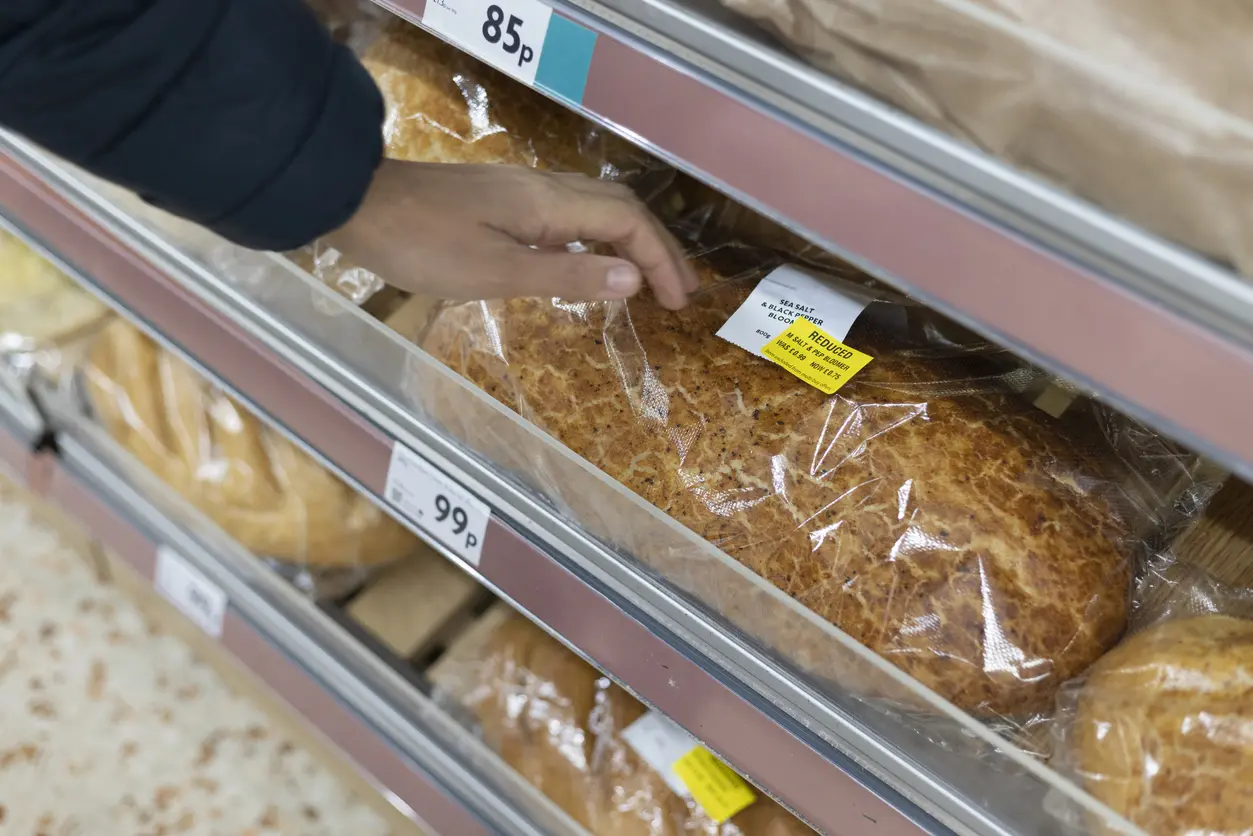
Bread for the World emphasizes that an effective food system gets food from farm to table while prioritizing good nutrition, equity, and creation stewardship. Bread members recognize that advocating for better, more coordinated government policies can be a tool to steward public resources more efficiently. One step the federal government can take to make our country’s food systems stronger is to adopt policies to reduce food waste, including on farms and in grocery stores. Analysis by ReFed, a nonprofit dedicated to reducing food loss and waste, found that in the United States, 208 pounds of food go to waste for every person, every year. Concurrently, the country has tens of millions of people struggling to put food on the table. In 2023, for example, 18 million households were food insecure, including 3.2 million households with children.
It is deeply unjust that families are going hungry in the United States when nutritious, filling food is being wasted. The problem can be prevented by crafting responsive policies that help lawmakers, producers, and consumers understand how food is wasted across the supply chain and then identify specific solutions. One such solution is identifying ways for farmers, businesses, and consumers to get their surplus food to communities that need it, through gleaning, food rescue, donation, or other methods.
Another top priority is to effectively steward natural resources used to grow food while protecting the environment. This is important for protecting human health, and the ability to sustainably produce food at present and in the future. According to ReFed’s February 2025 report, the U.S. wastes nearly a third of all food produced, which leads to climate impacts because food that rots in landfills emits methane, a greenhouse gas. Further, wasting food also means wasting the 16 percent of fresh water that is used to irrigate foods that are ultimately not consumed.
Many organizations are demonstrating through innovative programs that food that would otherwise go to waste can safely and efficiently be diverted to people in need, especially through food banks. Second Harvest Heartland is training its staff and streamlining logistics to enable grocery stores to save more surplus food for donation. In Minnesota and Wisconsin alone, Second Harvest Heartland has been able to divert 39.7 million pounds of food from landfills, instead putting that food on plates.
As mentioned earlier, we need a better understanding of where food is most commonly wasted, so that lawmakers, producers, grocery operators, emergency food operators, and consumers can co-develop feasible solutions—practices that reduce the economic, nutritional, and environmental damage caused by food loss and waste.
One potential legislative vehicle is the NO TIME TO Waste Act, which was introduced in Congress with bipartisan sponsors. The bill would speed progress toward the goal of reducing food loss and waste in the U.S. by 50 percent. The bill would also create a U.S. Office of Food Loss and Waste within the U.S. Department of Agriculture (USDA) that would lead coordinated inter-agency research initiatives on causes and solutions to food loss and waste. The office would partner with businesses that want to reduce food loss and waste. The NO TIME TO Waste Act includes provisions to support food recovery, partnership building, and data collection across local, state, and Tribal governments.
Laws like the Bill Emerson Good Samaritan Food Act already encourage the safe donation of food and grocery products to non-profits to prevent waste, and more can be done to ensure that losses are prevented on farms and in production, early on. The time to act on food loss and waste is now, and Congress can do so through the next farm bill or other relevant legislation.
Isabel Vander Molen is a climate hunger policy advisor with Bread for the World’s Policy and Research Institute (PRI).
Deepen your understanding of hunger’s causes and solutions – join our Institute Insights community and receive free, research-based articles like this one straight to your inbox.
Join Our Community
Related Resources

Final USDA Food Report Reveals Food Insecurity in America Remains High
Washington, D.C., January 13, 2026 — Bread for the World issued the following statement regarding the release of the USDA Household Food Security in...

WORKING TOGETHER TO END HUNGER: 2025 Legislative and Policy Achievements
A series of administrative and congressional actions this year dealt devastating blows to the United States’ international assistance...