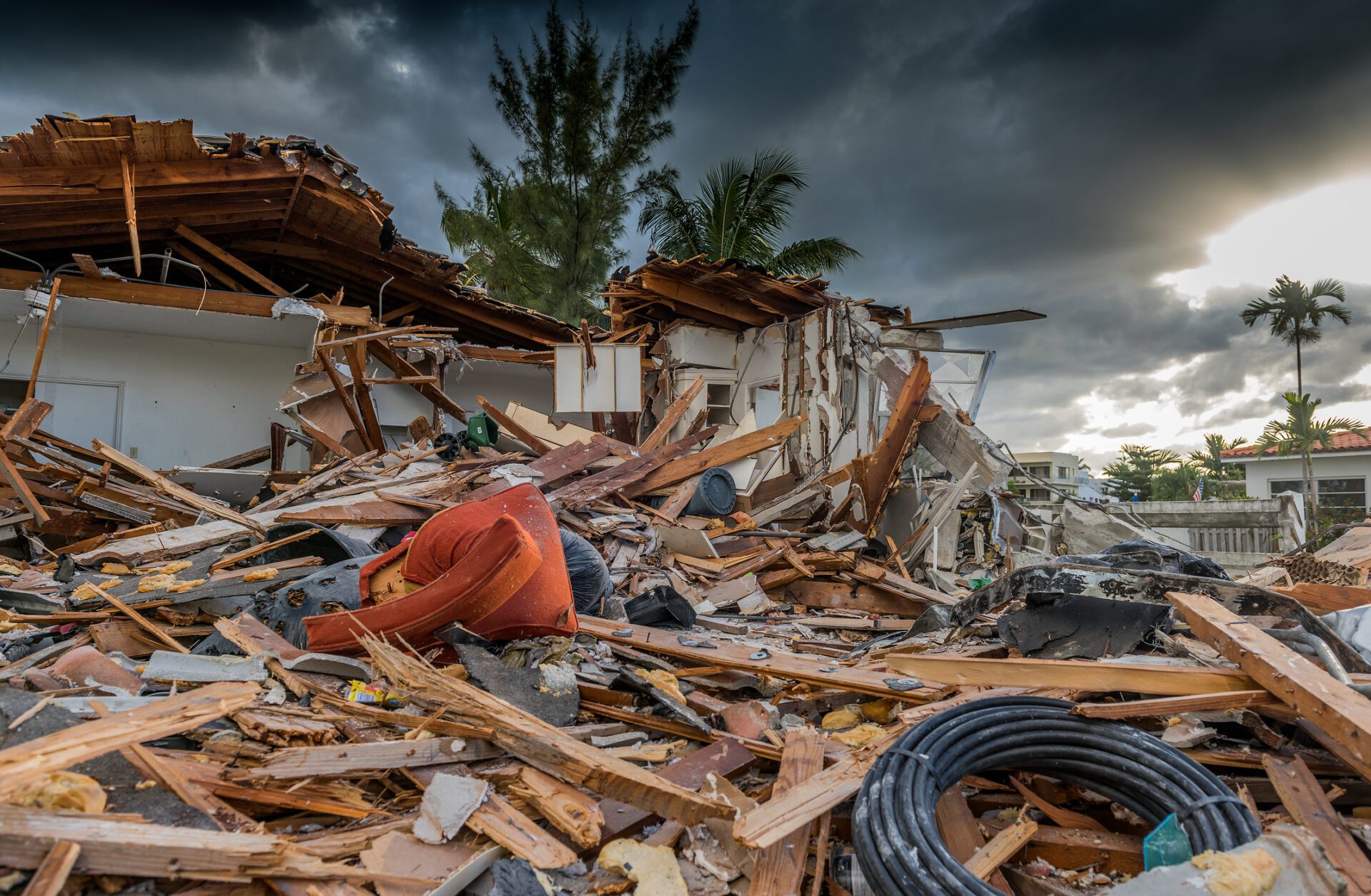
Extreme weather disasters in the U.S. threaten food security for millions of Americans. These events, from tropical storms and flooding to droughts and wildfires, can be disastrous and are expected to increase in the United States. The federal government, complemented by state actors, can help prevent hunger in disaster-affected communities by making food systems more resilient.
Government Coordination in Times of Crisis
When a disaster impacts the continental U.S., federal, state, and local actors coordinate emergency and food assistance responses. The U.S. Department of Agriculture (USDA), Small Business Administration (SBA), and the Federal Emergency Management Agency (FEMA) play complementary roles in providing support to re-establish food security.
From supporting food distribution through The Emergency Food Assistance Program to activating additional purchasing support through Disaster-SNAP and supporting Special Supplemental Nutrition Program for Women, Infants, and Children (WIC) participants as needed, USDA programs play a key role in emergency food response during a crisis.
In addition to emergency food response after disasters, critical infrastructure for communities needs to be rebuilt for long-term food security. Both the SBA and FEMA play a role in restoring food system infrastructure by providing loans and assistance to businesses and governments recovering after disaster. Ensuring that businesses like grocery stores and food system supply chains recover quickly is important for restoring food security in the longer term.
Learning from Hurricanes Katrina, Helene, and Harvey
Evidence from hurricanes that struck the Gulf Coast, North Carolina, and Texas demonstrates how food insecurity challenges persist when infrastructure is damaged and not recovered. Businesses like grocery stores, which are critical sources of food distribution and community life, may be damaged after disasters.
Hurricane Katrina cost the Gulf Coast states over $200 billion in damages in 2005 and left a legacy of unbalanced economic recovery across the U.S. as businesses and residents struggled to rebuild. Two years after Hurricane Katrina, predominantly Black neighborhoods in New Orleans, Louisiana, were 71 percent less likely to have access to a grocery store in comparison to non-majority Black neighborhoods in the city. Although this grocery gap narrowed to pre-hurricane levels by 2009, in some areas, the effects of lost grocery stores continue.
Today, Burnell Cotlon owns the only grocery store in the lower 9th Ward of New Orleans, an area of the city that was devastated by flooding from a levee breach. In an interview with WDSU News, Cotlon shared that the lack of grocery stores and businesses is preventing his neighborhood from fully recovering. “It’s about money. A lot of the big box stores aren’t coming here because there isn’t a lot of people,” he said. “A lot of people won’t come back because there’s not enough stores. Like what came first, the chicken or the eggs?”
Grocery stores may be eligible for post-disaster assistance from the SBA if they are located in an area with a disaster declaration. SBA disaster assistance programs could reassess how it provides support for grocery owners, especially independent or small grocery stores. For example, instead of using traditional loan payments, providing direct or streamlined grant payments to critical grocery stores may insulate them after disasters.
After Hurricane Harvey, which hit Houston, Texas, in 2017 and caused $160 billion in damages, it took some large grocery stores anywhere from 12 to 23 days to fully resume operations as normal. When stores struggle to re-open, operate at standard hours, and carry a full inventory of fresh foods due to supply chain and transportation challenges, customers’ options are limited for accessing food after a crisis.
Supply chain challenges may rely on broader infrastructure recovery needs – such as waiting for roads to be cleared or restoring energy services. These projects are typically supported by FEMA, which coordinates post-disaster response with local governments. Policymakers are considering how FEMA programs could be improved to support communities before and during crisis. Programs in the bipartisan Fixing Emergency Management for Americans (FEMA) Act of 2025 are designed so that local communities can be incentivized to design and approve recovery projects ahead of disasters to speed up the recovery process. Considering how recovery projects help effectively restore transportation, energy, or water services for food system actors could reduce prolonged post-disaster food insecurity challenges.
In 2024, Hurricane Helene caused $78.7 billion in damages across the east coast, especially in mountainous communities in North Carolina. For residents in Swannanoa, the Ingles Grocery Store was a community staple, but it was flooded out during Hurricane Helene. Nine months after the hurricane, the store remained closed, causing many local residents to rely on a nonprofit to distribute free fresh produce. The Ingles store wasn’t the only food business that stayed closed after Hurricane Helene – Ledford’s Produce, a local produce stand that served the community for 20 years, also shuttered after losing $100,000 in inventory.
A year after the storm, Diana Rhodes helped open a small grocery store with nonprofit support to fill the post-disaster grocery gap for locals. Although the store hours and supply of products aren’t the same as the previous Ingles location, it’s a community-led response to food security challenges left after Hurricane Helene.
It’s clear how ensuring food security after disasters involves restoring essential infrastructure and food supply chains. Community leadership efforts like those led by Burnell Cotlon in Louisiana or Diana Rhodes in North Carolina could be amplified by federal post-disaster responses that help prioritize disaster-resilient food systems.
Stronger and Safer Communities in the Future
Ending hunger requires complementary emergency food assistance and balanced long-term resilience so that residents can return to safer, food-secure homes and communities. Policymakers should consider how essential food systems infrastructure is recovered and made more resilient through coordinated SBA, FEMA, and USDA programs. As hurricane season continues through November, federal disaster responses designed to protect life, restore critical infrastructure, and increase food access after a disaster remain crucial.
Isabel Vandermolen is Climate Hunger Policy Advisor at Bread for the World’s Policy and Research Institute (PRI).
Deepen your understanding of hunger’s causes and solutions – join our Institute Insights community and receive free, research-based articles like this one straight to your inbox.
Join Our Community
Related Resources
The Case for Restoring Household Food Security Data
Every September, the U.S. Department of Agriculture (USDA) released its annual Household Food Security in the U.S. Report,...

Food Security in Puerto Rico: The Case for Transitioning NAP to...
Puerto Rico is a U.S. territory home to 3.2 million American citizens. This is a higher population than...