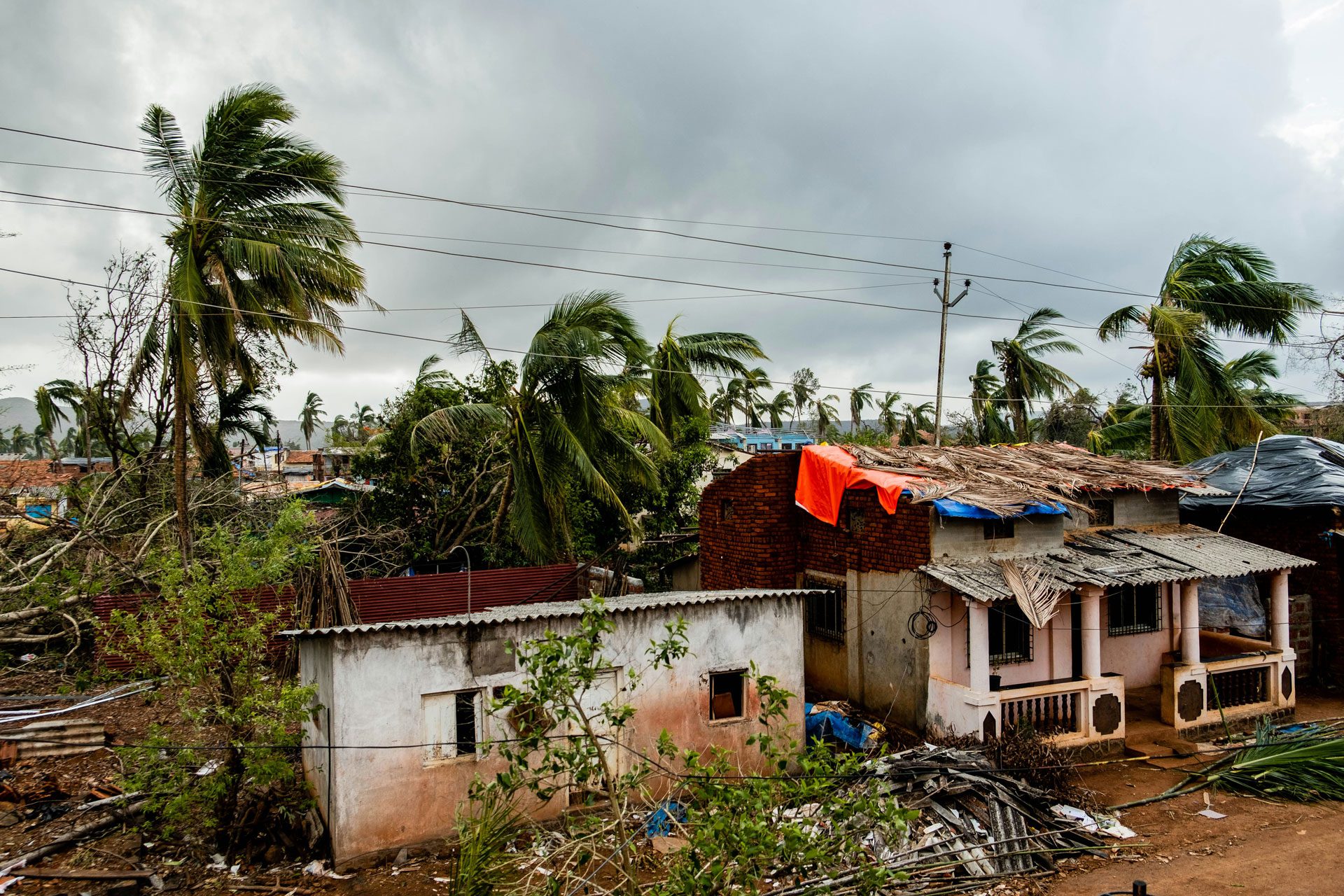
The U.S. government has long recognized the threat that disasters can pose to global food security and national security. Extreme weather disasters are the second leading cause of hunger in the world, responsible for acute food security crises affecting 87.5 million people.
International disaster assistance (IDA) has been a key response to this challenge and is a cornerstone of U.S. foreign assistance. Codified into law by the Foreign Assistance Act of 1961, President John F. Kennedy signed this bill into law, unifying scattered humanitarian and disaster responses and emphasizing the importance of alleviating human suffering caused by “natural and man-made disasters”.
IDA funds can respond to disasters caused by conflict, extreme weather, or disease outbreaks. Responses may include dispersing emergency food assistance, providing cash transfers, or providing water and medical supplies to a crisis area. Agricultural rehabilitation can also be supported with international disaster assistance funding, which can be a lifeline for smallholder farmers with limited resources. All of these efforts help to reduce the chance of hunger after disasters, which often rises as crops are destroyed, food prices rise, and access to markets becomes more difficult. After the U.S. Agency for International Development (USAID) was dismantled, the State Department’s Bureau of Disaster and Humanitarian Response coordinates IDA funding to organizations that are able to respond to on-the ground needs.
In 2022, for example, the U.S. complemented Pakistan-led disaster response efforts with IDA funds after catastrophic flooding. The Sindh province, a key agricultural region, lost 80 percent of its rice crop in addition to livestock and cash-crop losses. Several weeks after the floods, Sajid Ali, a local farmer who reported a 70 percent loss of his crops, told the The Guardian, “People have lost their crops, and some have also lost their seeds of wheat, which they had kept for new seasons in their storerooms and factories.” With U.S. support, the now shuttered USAID coordinated post-disaster assistance including nutritious food delivery, rebuilding infrastructure, and supporting displaced survivors.
The Critical Nature of Disaster Mitigation and Preparedness
Notably, the IDA section of the Foreign Assistance Act also includes disaster preparedness, prediction, and contingency planning to reduce or mitigate the risk of disasters before they occur. In FY2026, Congress approved a distinct disaster assistance account, called the Natural Disaster Mitigation and Preparedness Account (NDMPA), that can help improve pre-disaster mitigation and preparedness.
The NDMPA is distinct from the international humanitarian accounts because it has a more defined focus on the type and place of a disaster to respond to. The types of “natural” disasters within the NDMPA’s scope include extreme weather and geophysical disasters such as cyclones, floods, and/or earthquakes. Related disaster preparedness activities can include emergency response trainings, weather monitoring and prediction, and agricultural resilience building.
Examples of Disaster Response and Resilience from the Philippines and Fiji
In the Philippines, for example, the U.S. has supported The World Food Programme (WFP) which delivers interventions such as anticipatory cash-assistance programs to prepare families ahead of extreme disasters, which occur between 10 and 25 times annually. By supporting families with a $53 cash disbursement three days ahead of severe typhoons, the WFP supported families to buy food, medical supplies, and other needs in anticipation of the disaster.
U.S.-funded disaster prediction and monitoring capacity can also help save lives and reduce costs for families. In August 2026, the U.S. partnered with Fiji to improve landslide monitoring in the capital of Suva. Landslides caused by extreme rainfall have damaged crops, housing, and roads. Activities like rain and soil monitoring and capacity building trainings help Fiji residents reduce food security risks that could come from future disasters.
The Cost of Disaster Assistance and Preparedness
The U.S. can help countries respond to and overcome disasters by robustly funding global humanitarian assistance and continuing to work with multilateral partners and trusted NGOs in the delivery of emergency assistance and preparedness. In FY26, Congress funded International Disaster Assistance at $2.97 Billion and the Natural Disaster Mitigation and Preparedness Account (NDMPA) at just over 192 million. These investments comprise less than 1% of federal spending. U.S. funded disaster preparedness generates savings, with every $1 invested generating nearly $3.40 in savings and reducing the time it takes to deploy resources to the emergency.
Why Advocacy for International Disaster Assistance is Needed Right Now
Amidst looming threats of high heat and extreme storms from El Niño patterns, and in the wake of the catastrophic floods that struck Nepal in August, the need for disaster preparedness and mitigation is at an all time high. The U.S. is uniquely positioned to make investments that preserve life and strengthen food and nutrition security before and after disasters. For that reason, Bread for the World will continue to advocate Congress for robust investments in these accounts.
Isabel Vander Molen is a Climate Hunger Policy Advisor at Bread for the World’s Policy and Research Institute (PRI)
Deepen your understanding of hunger’s causes and solutions – join our Institute Insights community and receive free, research-based articles like this one straight to your inbox.
Join Our Community
Related Resources

Bread for the World Statement on Preservation of Critical Foreign Assistance...
Washington, D.C., October 2, 2026 – Bread for the World issued the following statement regarding the obligation of...

Food Security in Puerto Rico: The Case for Transitioning NAP to...
Puerto Rico is a U.S. territory home to 3.2 million American citizens. This is a higher population than...