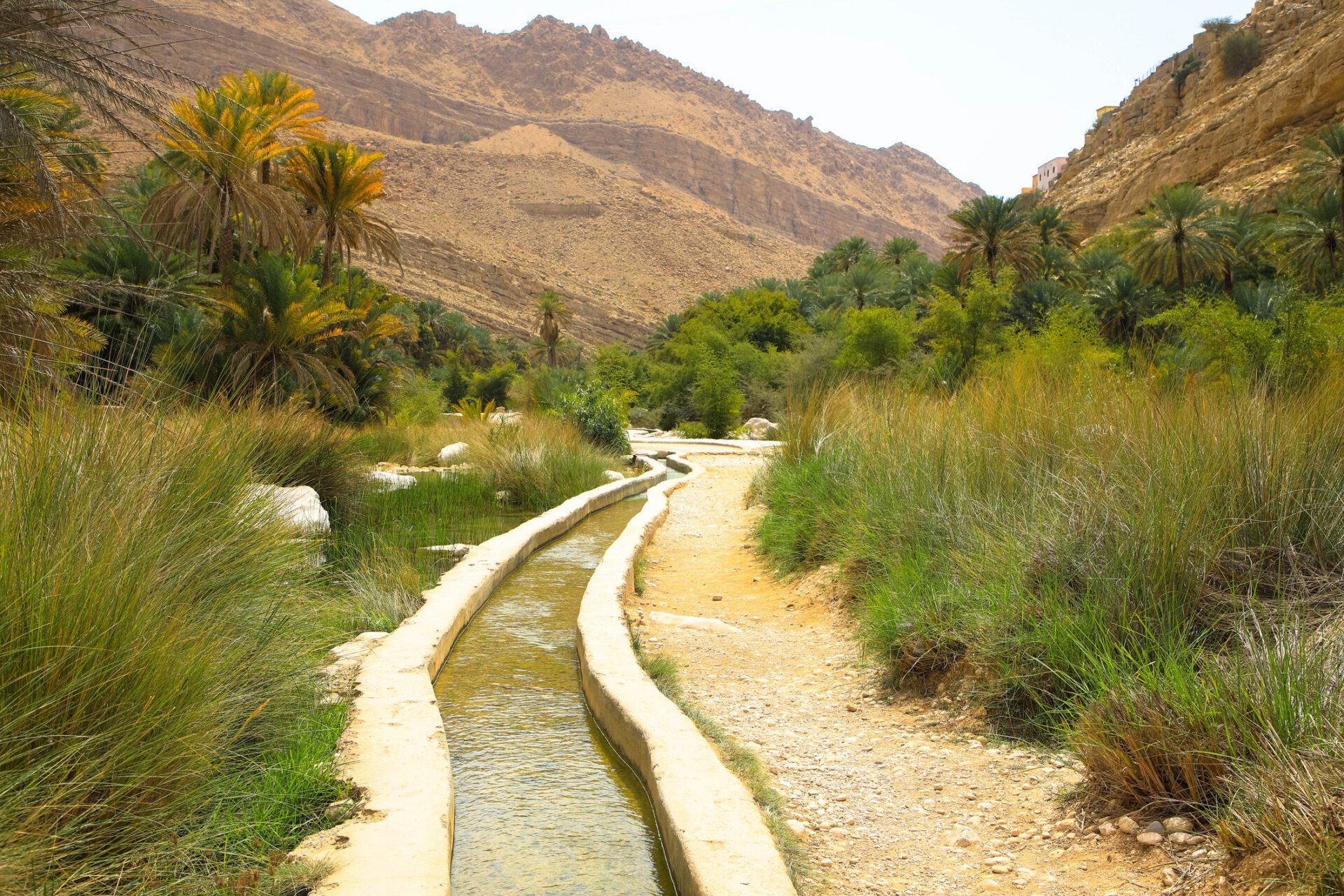
The Connection Between Agricultural Production and Water
Agriculture and water are inseparable. When one system is stressed, the impacts ripple across the others. As climate change intensifies in the United States and across the world, pressures on water availability and quality are becoming increasingly severe, with profound implications for what, and how, people eat.
The agricultural sector, responsible for using roughly 70 percent of global fresh water, sits at the center of this challenge. Demand for water is driven by livestock and crop production, yet outdated irrigation systems are often highly inefficient. Concurrently, climate change is intensifying droughts, reducing snowpack, and shifting rainfall patterns, all of which strain already limited resources. At its core, this crisis reveals a simple truth: water is not infinite, and conserving it is essential to securing our food supply.
Limited Water Supply Means Reduced Crop Production
In the United States, this dynamic is already visible. In California’s Central Valley, which produces a quarter of all fruits, nuts, and other foods in the U.S., recent droughts have forced farmers to leave fields fallow (unplanted), significantly reducing crop production. During the 2021–2022 drought, severe water shortages led farmers across the state to idle thousands of acres, including nearly 100,000 acres in the Sacramento Valley, the heart of California’s rice production.
Water constraints have persisted in recent years. In 2025, nearly half of all arable land in California’s Westlands Water District, the nation’s largest agricultural water district, sat mostly empty due to unreliable replenishment. Although wetter seasons have brought some recovery since 2021, projections of more frequent and severe droughts due to climate change underscore the need for resilient water management. Without it, the nation’s supply of nutrient-dense staples, from tomatoes and lettuce to almonds, remains at risk.
Reduced Crop Production Means Higher Food Prices, and Potential Hardship
At a fundamental level, water scarcity limits how crops grow and survive. Without reliable water, plants cannot absorb nutrients effectively, leading to lower yields and reduced nutritional quality. These pressures can extend beyond the farm, directly shaping food security and public health nationwide. As the Fifth National Climate Assessment (NCA5), the U.S. Government’s preeminent report on climate change impacts, risks, and responses, has documented, increasing drought and water scarcity are already disrupting agricultural production and contributing to greater food price volatility nationwide. This was evident following California’s 2021–2022 drought, when wholesale vegetable prices in the U.S. jumped more than 80 percent in a single year as water shortages devastated farms. When yields decline, supplies tighten and prices rise, disproportionately affecting low-income households that already spend a significant share of their income on food. What begins as water stress in the field can impact food on the table, especially fruits and vegetables.
Federal and State Programs are Part of the Solution
Addressing this challenge requires not only better technology, but better coordination. Practices such as drip irrigation, healthy soil management, and cultivating crops that require less water can help with water management. Adoption of the practices can still be a challenge because the costs and risks fall on individual farmers while the benefits extend across the system. The issue is not a lack of solutions, but a lack of support to scale them and to absorb risk, which is where policy becomes essential.
Programs like the Environmental Quality Incentives Program (EQIP), authorized through the Farm Bill and administered by USDA, are part of the solution. EQIP is voluntary and incentive-based, offering financial and technical assistance so farmers can adopt more efficient practices they might otherwise be unable to afford. These practices support soil health, water quality, reducing soil erosion, and more. Rather than imposing mandates, it expands farmers’ capacity to respond to increasingly unpredictable conditions while supporting wildlife conservation.
At the state level, California’s Healthy Soils Program (HSP) seeks to do the same, and more. Farmers and ranchers who participate can improve efforts like crop nutrition and water infiltration and storage through practices like decreased (or no) tillage, cover cropping, composting, and crop rotation. Since 2018, the program has funded more than 2,000 on-farm projects, awarded $162 million in grants to producers, and is slated to do more in the future through block grants and demonstration projects.
Still, significant gaps remain. Funding does not always reach smaller or more water-insecure producers, and some policies continue to prioritize short-term output over long-term sustainability. Without stronger alignment between water conservation and food system resilience – and more federal funding – even well-designed programs risk falling short.
Understanding the connection between water scarcity and food insecurity will move us closer to ending hunger in the U.S. and globally. It is not simply a matter of producing more food, but of managing natural resources in a way that sustains both ecosystems and human populations. As droughts grow in frequency and severity, aligning water conservation with food security is no longer optional. It is urgent.
Anne-Sophie Tchato is an International Policy Research Intern with Bread for the World’s Policy and Research Institute (PRI)
Deepen your understanding of hunger’s causes and solutions – join our Institute Insights community and receive free, research-based articles like this one straight to your inbox.
Join Our Community
Related Resources
From Farm to Fork: How SNAP Strengthens Rural America
When Katherine Lee Bates penned “for amber waves of grain” in America the Beautiful, she captured a bountiful...

U.S. Investments are Critical to Preparing Global Communities ahead of Disasters
The U.S. government has long recognized the threat that disasters can pose to global food security and national...