By Olga Gatesi
At Bread for the World, we advocate for policies that address hunger by tackling its root causes. Through our Nourish Our Future campaign, we are working to ensure that children and families, regardless of immigration status, have access to the nutritious food they need to thrive.
Persuading decision-makers to improve policies that pose barriers to ending hunger is an essential part of Bread’s work. One such policy is the exclusion of many immigrants from life-sustaining federal assistance programs like the Supplemental Nutrition Assistance Program (SNAP). It is not an oversight, but a structural injustice that puts families, especially women and children, in no-win situations.
As someone who has worked closely with immigrant families, I have seen the real-life consequences of this exclusion. And as advocates, we must demand better policies and better results.
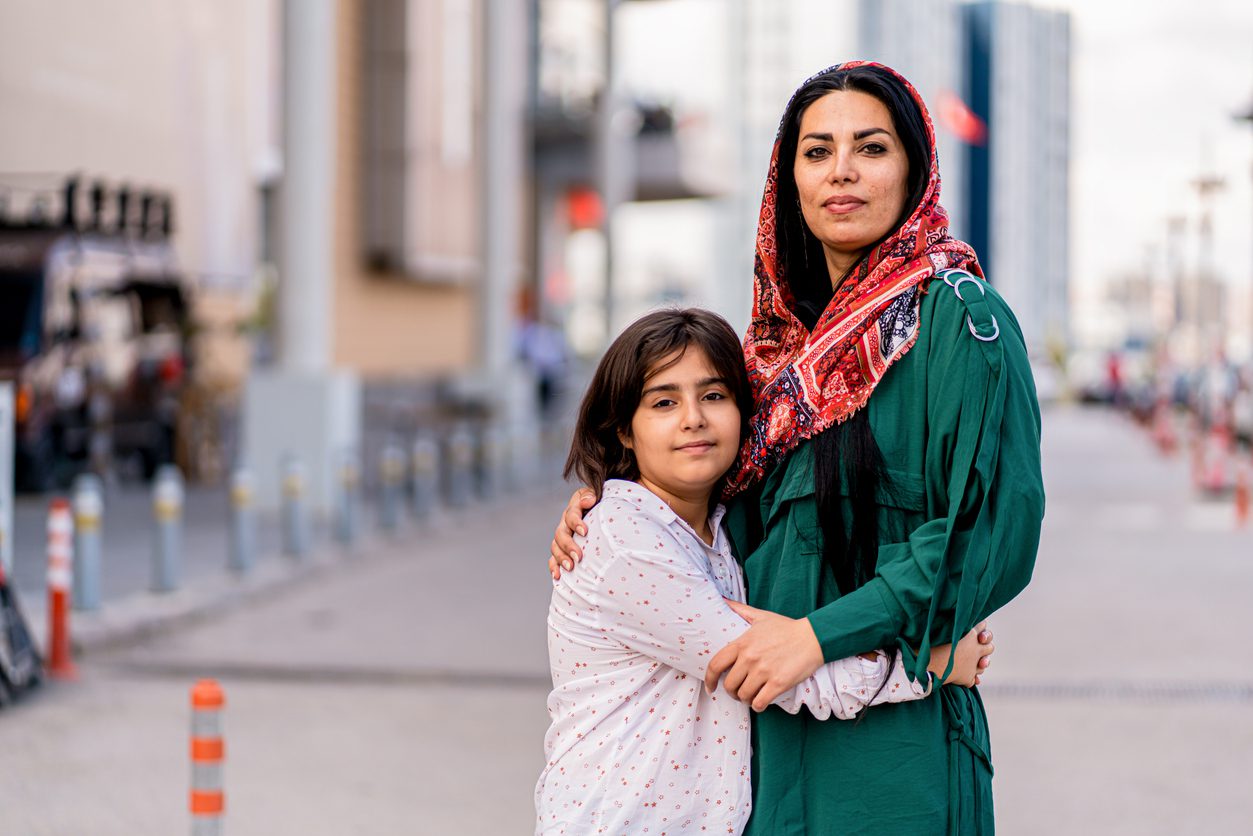
One mother I worked with in Wisconsin is etched in my memory. She was a lawfully present immigrant raising three U.S. citizen children, fleeing domestic violence, and trying to rebuild a life of safety. Despite her status and urgent needs, and although her children were eligible, she struggled to access SNAP. She had no income. Shelters were full. Her children often went without full meals. And unlike residents of California or Minnesota, she lived in one of the many states that does not provide state-funded nutrition assistance to immigrants excluded from federal aid. This mother’s story is not an isolated tragedy: it is the direct result of discriminatory policy.
In 1996, the Personal Responsibility and Work Opportunity Reconciliation Act (PRWORA) imposed strict eligibility limits on immigrants seeking federal assistance such as SNAP. Although some groups—such as refugees and asylum seekers—are exempt, many immigrants, especially lawfully present adults, must wait five years before becoming eligible for assistance. Yet hunger does not wait. There are other non-citizen populations that remain permanently excluded, no matter how long people have lived here.
Even when certain immigrants qualify for public benefits based on their legal status, they often face another obstacle: “sponsor deeming.” Under PRWORA, an immigrant’s sponsor’s income is counted as part of their own, regardless of whether the sponsor provides support. This frequently disqualifies families from SNAP even when they are struggling to survive. Survivors of domestic violence, like the woman I worked with, may be exempt from sponsor deeming, but very few immigrants know this, and even fewer caseworkers are trained to identify this exemption. Fear and misinformation lead many to not even apply.
At Bread for the World, we believe every person deserves access to food, dignity, and opportunity—and Bread members act on these beliefs. The woman in Wisconsin who feared both her abuser and the system meant to protect her is not alone. She is one of many. Our advocacy must center her, her children, and others in such situations.
It will be impossible to end hunger in the U.S. if we continue to exclude immigrant communities from the table. Bread is uniquely positioned to lead on this issue. We must use our voice to ensure that no family, regardless of status, is left behind in the fight for nutrition justice.
In July, the U.S. Department of Health and Human Services (HHS) and the U.S. Department of Agriculture (USDA) issued public notices in the Federal Register that interpret the definition of “federal public benefit” as articulated in PRWORA. These agency actions may further harm immigrant communities by restricting access to federally funded programs that have not historically screened people for immigration status. While little information has been released on implementation, the language in the notices would reinforce a state’s ability to screen for eligibility based on immigration status across certain federally funded programs, including WIC and Head Start.
To make nutrition justice real for immigrant families, we must reject policies that dehumanize and exclude people. Instead, we must respond by pressing for reforms that will make food assistance available to everyone who needs it. The story of the mother in Wisconsin is not an exception; it is emblematic of how federal policies, like PRWORA, and administrative barriers, like sponsor deeming, bar immigrant families from food resources they sometimes desperately need. The recent HHS and USDA notices, rather than repairing this harm, could compound it by reinforcing exclusion and deterring state-level progress.
No child should have to sit in a classroom with an empty stomach, unable to focus because their family was denied help. Hunger robs children of the energy to learn, grow, and thrive. It is a barrier to education and opportunity. When we exclude immigrant families from nutrition assistance, we are failing our children and jeopardizing our collective future.
Olga Gatesi is a Policy and Research Institute intern with Bread for the World.
Deepen your understanding of hunger’s causes and solutions – join our Institute Insights community and receive free, research-based articles like this one straight to your inbox.
Join Our Community
Related Resources
Pursuing Global Collaboration to End Insecurity and Hunger Caused by Climate Change
In November 2025, the 30th annual U.N. Climate Change Conference, better known as COP30, took place in Belem,...
Implications of this Year’s Rapid Changes in U.S. Nutrition Policy
This year, Congress and the Executive Branch, specifically the U.S. Department of Agriculture, have passed laws and used...