
For millions of Americans, going to the grocery store is not just a stop on the way home—it’s a lifeline made possible by programs like SNAP. This program keeps people healthy, prevents hunger, and offers stability during challenging times of need for some of our most vulnerable communities, including children, seniors, working families, and people with disabilities.
Despite the impact, the recently House-passed “Big Beautiful Bill” would cut nearly $300 billion from the Supplemental Nutrition Assistance Program (SNAP) through 2034. The anticipated cut, which would be the largest in the program’s history, would result in more than 2 million children losing at least some of their SNAP benefits, and some states could cut the program altogether. Potentially removing roughly 30 percent of SNAP threatens food assistance for roughly 3.2 million adults in a typical month, including 1 million older adults aged 55 through 64 and 800,000 parents of school-aged children.
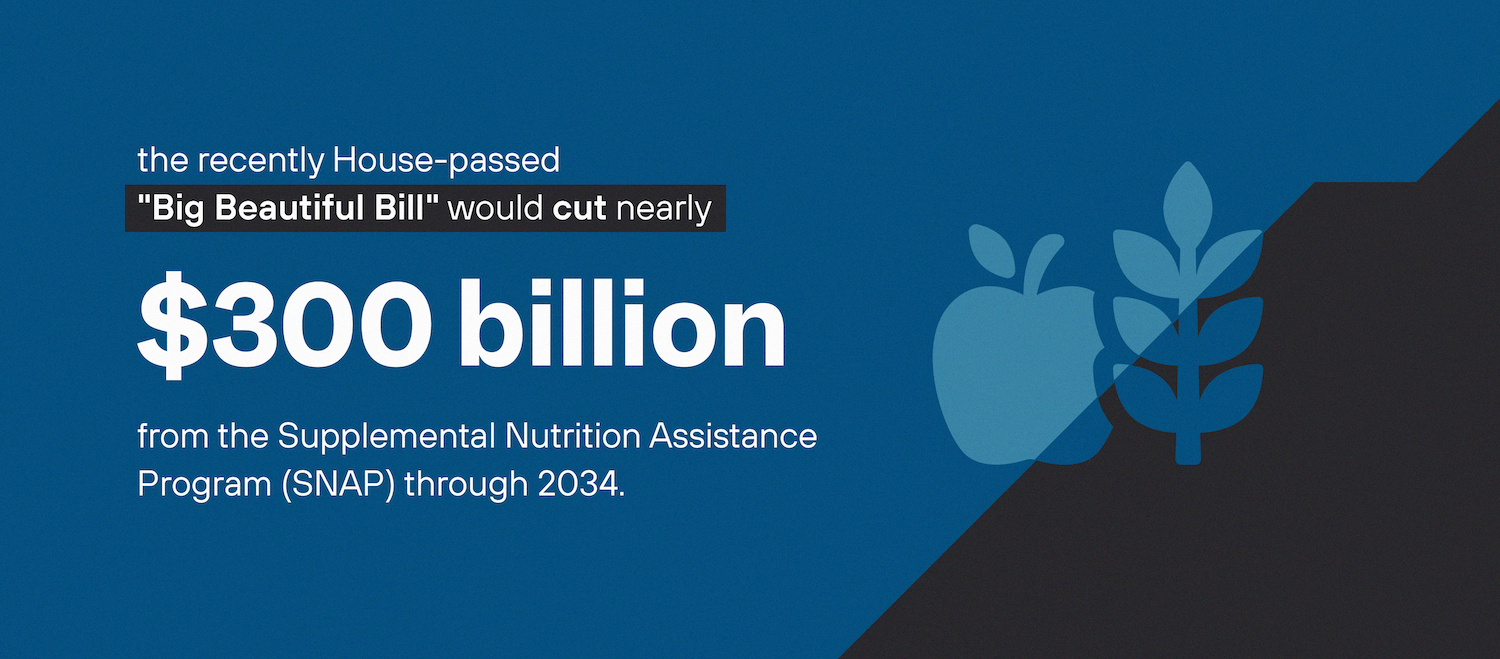
The Senate Agriculture Committee released its budget reconciliation text on June 16, 2025, which included nearly $211 billion in cuts to SNAP. Even though the proposed changes result in fewer cuts than the House reconciliation bill, this would still cause massive disruptions to the SNAP program as we know it. The reconciliation bill now under consideration would cut $211 billion from SNAP. It is essential to understand how these policies would severely limit SNAP’s ability to respond in the wake of a potential economic downturn, worsen hunger for more than 2 million children, and undermine SNAP’s ability to stimulate the economy.
What is SNAP?
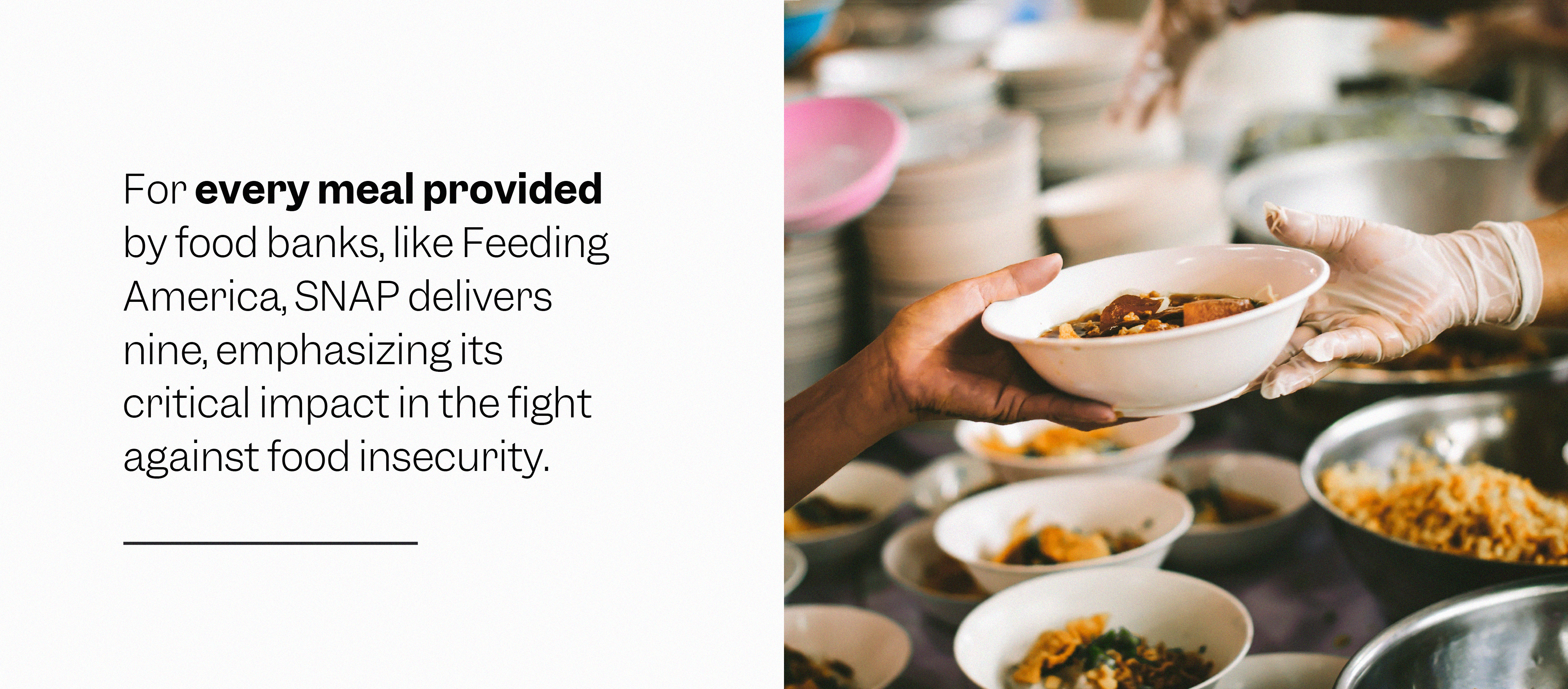
Formerly known as “food stamps,” the Supplemental Nutrition Assistance Program (SNAP) is a federal nutrition program administered by the U.S. Department of Agriculture (USDA) in partnership with state agencies. It provides financial assistance to low-income individuals and families to help them purchase certain eligible foods. As the largest program fighting hunger in the United States, SNAP plays a vital role in ensuring access to a basic, nutritious diet for millions of Americans, including children, the elderly, and people with disabilities. In fact, for every meal provided by food banks, like Feeding America, SNAP delivers nine, emphasizing its critical impact in the fight against food insecurity.
How does SNAP Work?
Benefits are provided on electronic benefits transfer (EBT) cards, which work like a debit card, to purchase eligible food items at grocery stores, supermarkets, and other eligible retailers.
Who is Eligible for SNAP?
SNAP’s eligibility is based on factors like income, household size, expenses, and citizenship status, with certain work requirements and deductions that can help applicants qualify.
What States Will Be Most Impacted by SNAP Cuts?
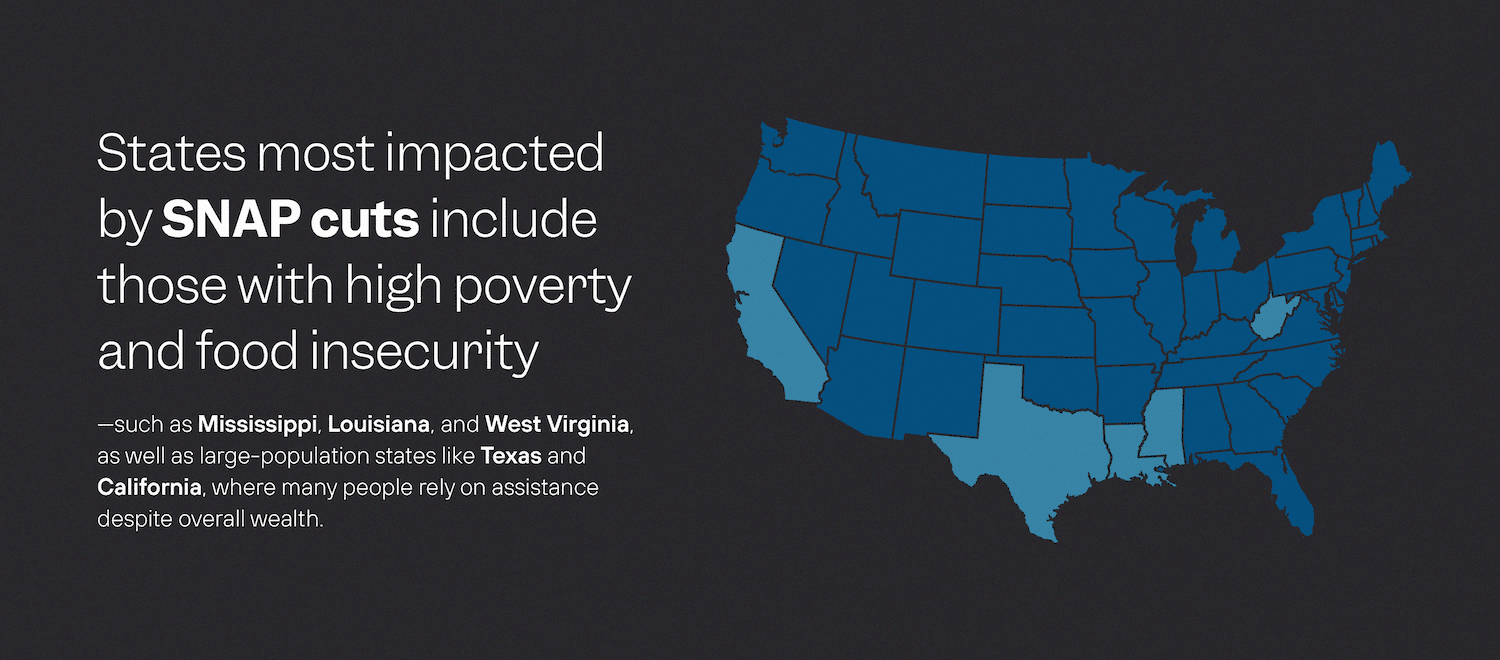
States most likely to be impacted by SNAP cuts include those with high poverty and food insecurity—such as Mississippi, Louisiana, and West Virginia, as well as large-population states like Texas and California, where many people rely on assistance despite overall wealth.
The Impact of SNAP on Rural Communities
In the United States, 13.8 percent of the population resides in rural, non-metropolitan areas. Rural communities make two-thirds of all U.S. counties and also have some of the highest rates of food insecurity. This makes programs like the Supplemental Nutrition Assistance Program (SNAP) especially vital, as their impact extends beyond individual households to entire communities. SNAP participation is highest in rural areas, reaching 16 percent, where it helps families weather financial hardships, such as job loss or the rising cost of living due to inflation.
SNAP, along with the Special Supplemental Nutrition Program for Women, Infants, and Children (WIC), plays a key role in reducing food insecurity and improving nutritional outcomes. As a public health nutrition program, WIC supports early childhood development, enhances school performance, and contributes to better long-term health for mothers and babies.
While food insecurity and SNAP participation are often discussed together, the data shows they don’t always align. SNAP participation more closely correlates with poverty rates than with food insecurity alone.
Among the top five states with the highest SNAP participation—New Mexico (23%), D.C. (20%), Louisiana (19.6%), West Virginia (17.4%), and Oregon (17.3%), only Louisiana also appears in the top five for household food insecurity.
Conversely, states like Arkansas, Texas, and Oklahoma rank high in food insecurity but not in SNAP usage. When mapped against poverty rates– Mississippi, Louisiana, West Virginia, New Mexico, and Arkansas– the connection becomes clearer, with Louisiana standing out as the only state consistently in the top five across all three metrics.
Despite these benefits, food insecurity persists, affecting 13.5% of U.S. households. SNAP remains a lifeline, and cuts to the program would not only harm vulnerable populations but also trigger widespread economic consequences. With SNAP supporting over 250,000 jobs, including more than 139,000 in agriculture, manufacturing, transportation, and municipal services, its impact extends far beyond individual households, particularly in rural communities where every SNAP dollar generates even greater returns, supporting both families and local economies. Notably, this excludes Puerto Rico, which would rank highest in both poverty and food insecurity if included.
Farmers are also directly impacted by SNAP spending, as nearly a quarter of every dollar spent on food at home goes to farmers. If SNAP benefits are reduced, food purchases would drop by about half for every dollar cut. Furthermore, the bill’s proposed $230 billion reduction in SNAP funding would remove an estimated $30 billion in revenue from farmers and ranchers, another blow to an already struggling farm economy.
Additionally, cuts to SNAP would also jeopardize access to other nutrition programs for some participants. For example, many children in SNAP households are automatically enrolled in free school meals through direct certification. Additionally, if a parent or guardian applies for WIC benefits and is already enrolled in SNAP, Temporary Assistance for Needy Families (TANF), or Medicaid, they would automatically be considered income-eligible for the WIC program through adjunctive eligibility. As WIC currently serves over 6.7 million people, cuts to SNAP would have downstream impacts that would harm already vulnerable children and families.
The Moral and Economic Case for Preservation
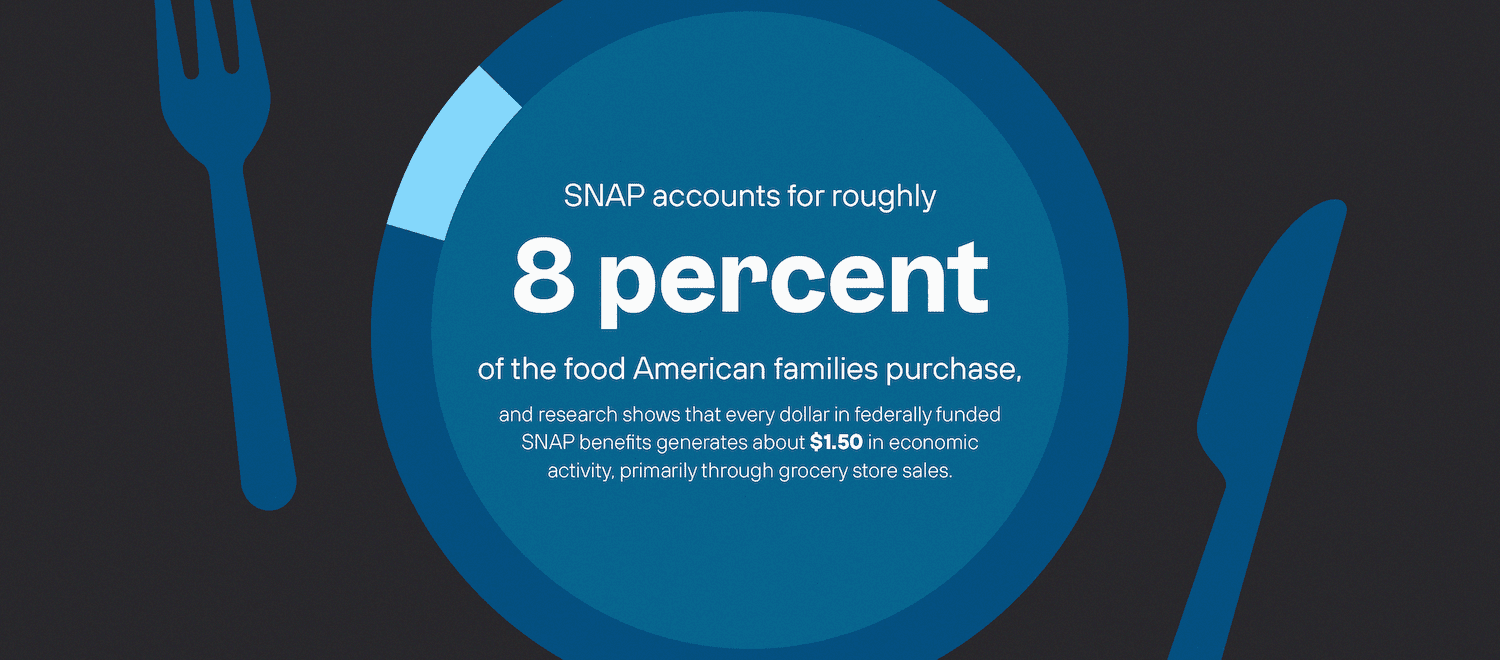
SNAP is more than just an expense; it’s an investment in our society. These programs stimulate local economies and create numerous benefits that extend far beyond individual households. SNAP accounts for roughly 8 percent of the food American families purchase, and research shows that every dollar in federally funded SNAP benefits generates about $1.50 in economic activity, primarily through grocery store sales. By supporting basic needs like food, SNAP helps to strengthen communities, reduce long-term public expenses, and foster a healthier, more stable population overall.
What Can You Do To Help?
Everyone has a role to play in protecting programs like SNAP. One of the most effective ways to make a difference is by contacting lawmakers and urging them to support and strengthen these critical benefits. Supporting local organizations and campaigns that provide food and advocacy can also help amplify the impact. Additionally, sharing stories, facts, and personal experiences on social media raises awareness and builds momentum to keep these essential programs in place for those who need them most.
A total of 47.4 million people, including 13.8 million children, live in food-insecure households with limited or uncertain access to food, representing 14 percent of all U.S. homes. For recipients of supplemental programs like SNAP, these aren’t luxuries–they’re necessities. Without them, the most vulnerable members of our communities face hunger and further financial hardship. These programs offer stability and a chance to thrive, not just survive. Expanding and protecting these programs isn’t just good policy, it’s essential for preventing hunger on a national scale. A Golden Age of food security can begin once we defend these lifelines for our most vulnerable communities and invest in the future of our entire society.
Related Resources

Planting Seeds of Hope for Kentucky
On October 30th, faith leaders, farmers, policy experts, and advocates gathered for “Nourish Our Future: Seeds of Hope...
Implications of this Year’s Rapid Changes in U.S. Nutrition Policy
This year, Congress and the Executive Branch, specifically the U.S. Department of Agriculture, have passed laws and used...