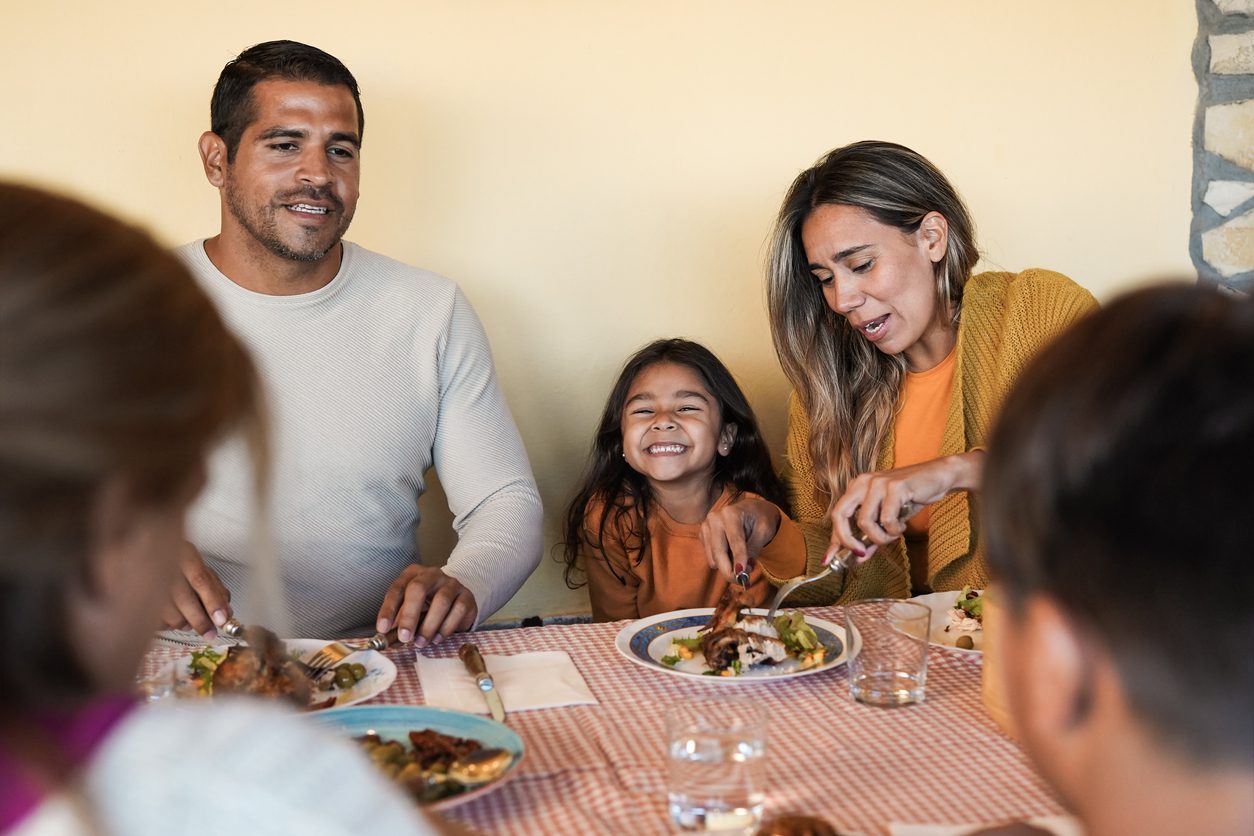
The kitchen table has long been a gathering place for families to discuss some of their greatest problems and challenges. Individuals campaigning for public office are often advised to focus on these “kitchen table” issues, centering the conversation around voters’ most pressing needs. Most often, these concern the family budget—for example, the price of gas and groceries, or inflation.
In recent years, the most common kitchen table issue is the price of food. Between 2020 and 2024, food prices in the U.S. rose by 23.6 percent. USDA projects that food prices will continue to increase in 2026.
Meanwhile, average wages have not kept pace with increases in food costs. For some workers, like bus drivers, grocery store clerks, and nursing aides, their wages have remained stagnant, or slightly increased, but not on par with increases in costs of living.
For a family in Ohio living on $40,000 a year, the rising cost of groceries meant spending nearly 20 percent of its income on food in 2023, compared to about 11 percent for a higher-income household. As a result, millions of Americans are faced with both higher prices and fewer financial resources when they go to the grocery store. The combination of the two—higher prices and less money—led to a three-percentage point increase in household food insecurity between 2020 and 2023.
The Supplemental Nutrition Assistance Program (SNAP) is our country’s first line of defense against hunger. For many years, Bread for the World members have advocated for continued access to SNAP and other federal nutrition programs because they help families meet an immediate need: groceries. In recent years, SNAP has enabled approximately 40 million Americans to stretch their monthly grocery budgets. Bread continued to voice strong support for SNAP during congressional budget debates in 2025, but in July, Congress made cuts to the program that will make it harder for many households to stay enrolled.
In recent months, policy discussions on how to make groceries more affordable for families have focused on a bold, but not entirely new, idea: government-owned grocery stores.
The recent uptick in discussion and media reporting on potential city-owned grocery stores has been met with skepticism, confusion, and in some instances, visceral opposition. Many simply say that this is out-and-out socialism, as in the old Soviet Union. Other reactions have argued that city-owned stores won’t solve systemic problems such as price gouging.
Government-owned grocery stores are not as rare as one may think. Local governments have intervened to protect access to stores in cities and towns, including in Madison, WI; Atlanta, GA; and St. Paul, KS. Grocery stores with local government support have had varying degrees of success and challenges. A city-owned grocery store in Erie, KS, recently announced plans to lease the store to a private operator, following years of financial struggles.
The economics of keeping a small government-owned store open are difficult. In 2024, the average profit margin for food retailers was just 1.7 percent and has historically hovered between 1 and 3 percent. For every dollar in sales, grocery stores receive 1 to 3 cents after costs.
Stores like Walmart and Kroger have similar low profit margins, but they have advantages such as economies of scale and the ability to create store-owned private brands. Government-owned grocery stores in states like those in Kansas and Wisconsin do not operate at the scale of big-box stores and are not selling goods under a private brand.
But the largest government-owned network of stores has enormous scale— the Department of Defense (DoD) military commissary system. DoD operates 235 commissaries, and they are fully staffed by U.S. government employees and contractors. The latest report on store activity, covering FY2024, revealed that commissary sales reached $4.8 billion from more than 72 million transactions.
Like Walmart and Kroger, the military commissary system operates on a large scale and sells its own private label brands around the globe. Unlike for-profit grocery stores, however, military commissaries are legally prohibited from turning a profit; their prices must cover only their input costs. As a result, military families save a significant amount of money by shopping at commissaries. Grocery bills were on average 24 percent lower than comparable purchases at privately-owned local markets. They also accept SNAP benefits and recently began to accept SNAP online purchases.
If the government can sustainably and effectively run a network of grocery stores for military personnel in the U.S. around the world, is there any reason to doubt that it can do the same for food insecure families living in food deserts? Proponents of publicly owned grocery stores argue that the stores, as with some federal nutrition programs, can serve families with low incomes and limited grocery store access. Government run grocery stores could help fill this hole in the market that often leaves low-income and rural populations underserved.
Government-owned grocery stores will not solve food access challenges alone, but they can be a part of the solution. Having a public option – whether for healthcare, education, transportation, or grocery shopping – helps to build a more equitable society and economy that works for all Americans.
Taylor Johnson is a domestic policy advisor with Bread for the World’s Policy and Research Institute (PRI).
Deepen your understanding of hunger’s causes and solutions – join our Institute Insights community and receive free, research-based articles like this one straight to your inbox.
Join Our Community
Related Resources
Planting Seeds of Hope for Kentucky
On October 30th, faith leaders, farmers, policy experts, and advocates gathered for “Nourish Our Future: Seeds of Hope...
Implications of this Year’s Rapid Changes in U.S. Nutrition Policy
This year, Congress and the Executive Branch, specifically the U.S. Department of Agriculture, have passed laws and used...