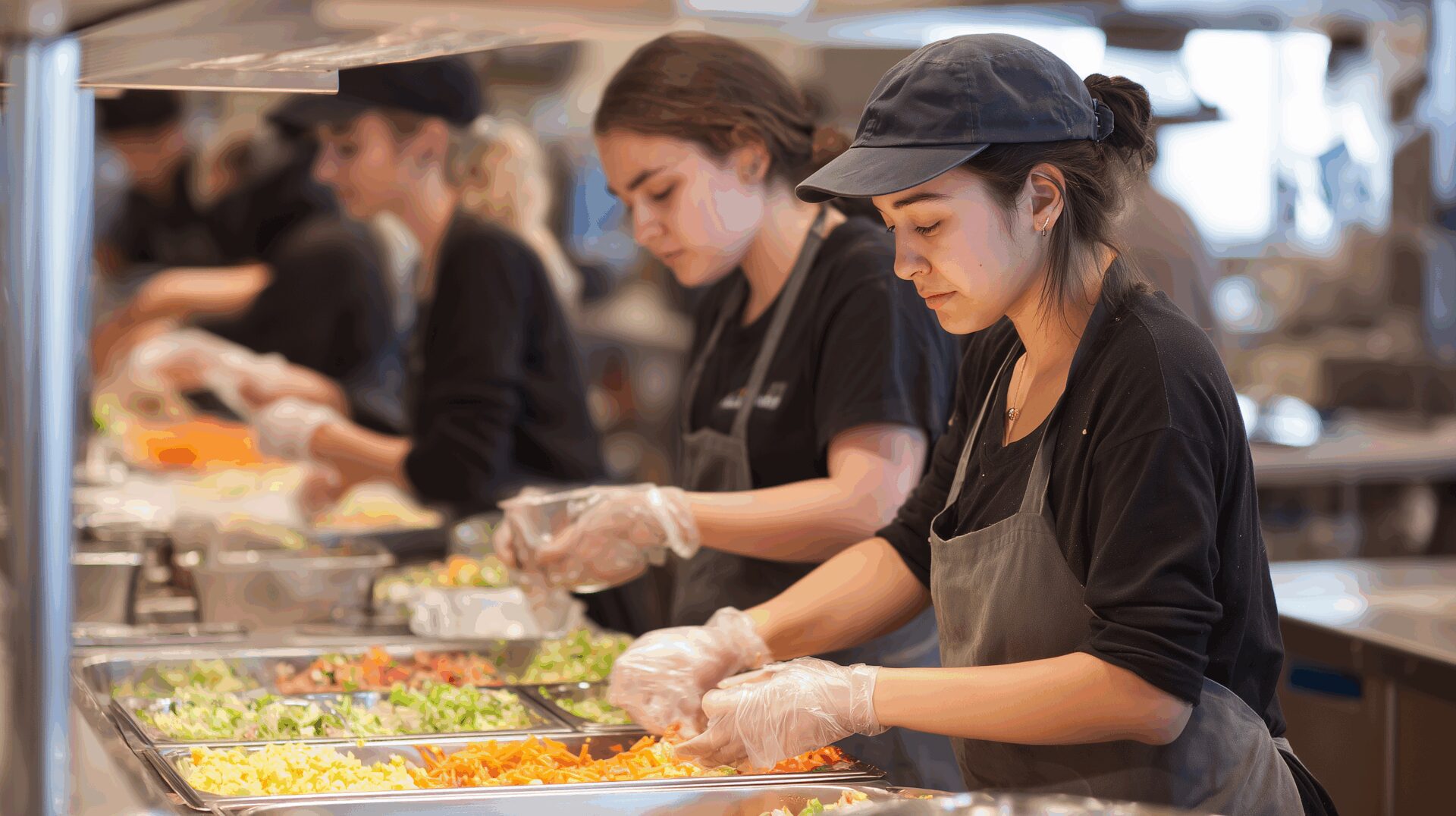
At the core of many federal nutrition programs is ensuring that children, whether in school or at home with their families, have access to the nourishing food they need to thrive.
Before working at the U.S. Department of Agriculture (USDA), I seldom thought about the food and nutritional needs of children who are incarcerated or residing in Residential Child Care Institutions (RCCIs). These include juvenile detention and correctional facilities, group homes, or any public or private non-profit residential facility that operates principally to care for children and includes educational instruction.
While working at the USDA, I briefly had an assignment focused on school meals and RCCIs that included a site visit to Nashville, Tennessee. It was a rare moment where my personal and work worlds collided.
As a young person growing up in Southeast San Diego, I knew many children from my neighborhood, from school, and in my own family, who went to “juvy,” or juvenile detention.
It was often a distressing experience for the child and their parents because so many factors were out of their control. Would they be treated fairly in court? Depending on the actions that landed them in juvenile detention, would they be retaliated against, or seek retaliation? Would they fall behind in school? I remember these questions percolating, but not so many concerns about what they would eat, or the quality of their food, while in detention.
Bread for the World and other organizations have advocated for access to SNAP, the Supplemental Nutrition Assistance Program, for citizens returning to the community. We have written about the depravity of mass incarceration. We have also pointed out that the incarceration of parents can exacerbate household food insecurity, especially for children. We have proclaimed boldly that SNAP is a crucial resource needed for human flourishing and that children, and their futures, must be nourished.
Children who are incarcerated or in pre-trial detention, and who are separated from their families, must also be nourished with healthy food. The USDA Food and Nutrition Service responded to this need, in part, by making meals provided by the National School Breakfast (SBP) and School Lunch (NSLP) programs reimbursable and flexible for RCCIs. While many facilities can typically procure their own food service provider, RCCI operators also have this federal option, which offers some of the healthiest options available to children.
The basis for providing the SBP and NSLP to children in RCCIs is just that – they are children. Importantly, they are still entitled to a healthy school meal, just as they would be if they were enrolled in a typical public school. In 2019, Congress reauthorized the Juvenile Justice and Delinquency Prevention Act. The bill states that “the Attorney General, in consultation with the Secretary of Agriculture, shall provide guidance to States relating to existing options for school food authorities in the States to apply for reimbursement for free and reduced price lunches under the Richard B. Russell National School Lunch Act for juveniles who are incarcerated and would, if not incarcerated, be eligible for free or reduced price lunches under that Act.” That one line set the stage for more opportunities for USDA’s Food and Nutrition Service (FNS) and the Department of Justice’s (DOJ) Office of Juvenile Justice and Delinquency Prevention, or OJJDP, to work together on this issue.
On a site visit to the Juvenile Court of Metropolitan Nashville and Davidson County, I saw some of this work in action, particularly for young people in pre-trial detention. According to the DOJ, pre-trial detention is intended to provide protection to the public, supervision to the child, and the guarantee of a court appearance. At this particular facility, the staff wanted to learn more about opportunities and challenges with operating school meal programs, and how they could improve the taste and nutritional quality of their meal offerings. My colleagues from USDA were experts in administering the school breakfast and school lunch programs. Listening to the staff’s perspectives and challenges helped them become better equipped to inform future federal guidance on this policy.
On this visit, we also had the opportunity to meet with and listen to representatives from the Council of Juvenile Justice Administrators (CJJA), many of whose members make the decisions about what food offerings will be available to the young people in their facilities.
In all, the visit illustrated that FNS cares deeply about how their programs are administered and that some elected judges, like the Honorable Sheila Calloway, who welcomed us into her courtroom, also care deeply about the well-being of children under their care and authority. But we must remember that these are not revelatory interventions.
Administering USDA’s school breakfast and school lunch programs is not a sweeping solution to improving the meal offerings in RCCIs, but it is an important alternative in a space where food environments can be fraught and under resourced. Children, whether in a classroom, an RCCl, or before a judge, still deserve the best future possible, and healthy food is crucial to nourishing their future.
Sakeenah Shabazz is deputy director, Policy and Research Institute, with Bread for the World.
Deepen your understanding of hunger’s causes and solutions – join our Institute Insights community and receive free, research-based articles like this one straight to your inbox.
Join Our Community
Related Resources
Bread applauds robust bipartisan dialogue and Senate passage of remaining FY...
Washington, D.C., January 31, 2026 —Bread for the World issued the following statement regarding the Senate passage of...
How Humanitarian Assistance Saves Lives
When global catastrophes strike, whether through conflict, natural disasters, or disease, communities find themselves without the most basic...